 USA
 Canada
 Brazil
 Germany
 France
 Italy
 Switzerland
 Sweden
 Spain
 Norway
 Russia
 South Africa
 Japan
 New Zealand
 Australia

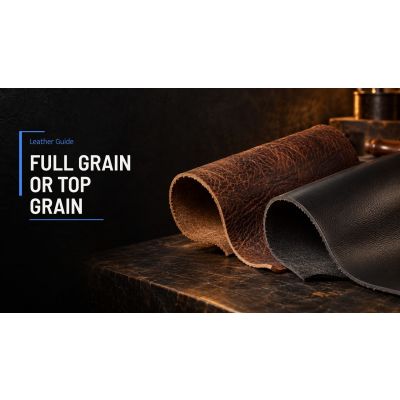
Short answer: "genuine leather" only tells you the product contains real leather, not that it is good leather. Full-grain is the strongest, most natural layer of the hide. Top-grain has had the surface sanded and finished. Bonded leather is leather scraps and fibers glued onto a backing. For a jacket you want to keep for years, look for full-grain or top-grain cowhide and ignore the phrase "genuine leather".
The four labels side by side
| Term | What it is | Surface | Quality signal | What to do about it |
|---|---|---|---|---|
| Full-grain | The whole grain layer of the hide, nothing sanded off | Natural grain, marks may show | Highest grade; develops a patina with wear | Good choice for jackets and bags you want to age well |
| Top-grain | The outer grain layer, usually with the top surface sanded or buffed and a finish applied | More uniform look | Good, depends on finish and thickness | Ask which finish was used and how thick it is |
| Genuine leather | Real leather, often a lower split layer, heavily processed | Often coated or embossed | Not a grade; no quality guarantee | Do not treat it as a mark of quality; ask for the hide type and layer |
| Bonded leather | Leather fibers and scraps bound with adhesive onto a backing | Printed or embossed to look like leather | Low; tends to peel and flake | Avoid for jackets and anything that flexes |
If you only remember one row, remember this one: "genuine leather" is a floor, not a ceiling.
Full-grain vs top-grain leather: which is better?
Neither is better in every case. Full-grain keeps the strongest fibers and shows the hide as it grew, so it suits buyers who like natural marks and a patina. Top-grain gives a smoother, more even surface and a wider range of colors, and it can be just as durable when the hide is thick and the finish is not heavy. If you compare "full grain leather vs top grain" on two product pages, the useful differences are thickness, finish and construction, not just the name.
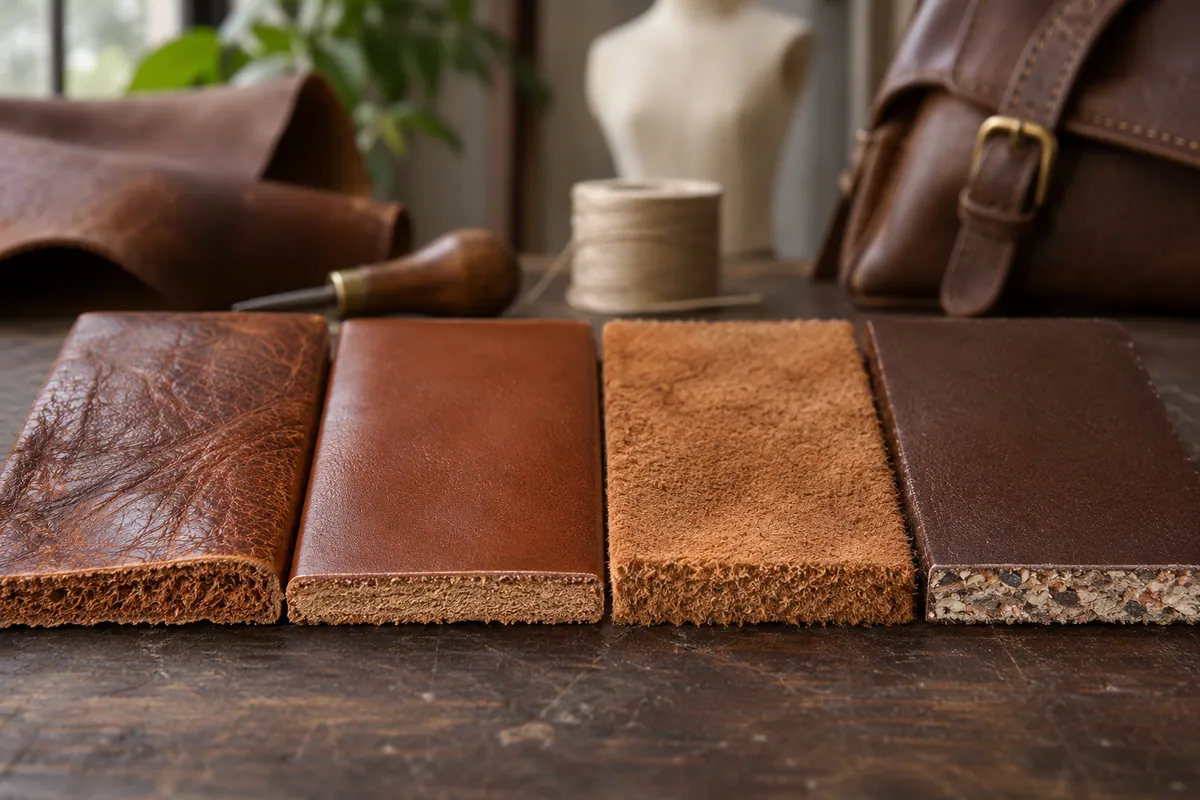
One practical point: a heavy finish can hide how a leather will age. A lightly finished hide develops character, while a thick pigment coating can wear, scuff and flake at the surface instead. Ask how heavy the finish is.
Five label myths worth dropping
- "Genuine" means the best. It means real, nothing more.
- "Top-grain" means cheap. It does not; it is a respected grade when the hide is good.
- Perfect surface means better leather. A flawless surface can mean a heavily corrected one.
- Heavier always means better. Thickness should match the garment. A coat does not need saddle leather.
- A leather smell proves it is leather. Scents can be added to imitation material.
A quick buying checklist
- Does the page name the hide (cowhide, lambskin, goatskin) and the layer?
- Is there a close-up photo of the surface and the cut edge?
- Is the thickness stated, or the weight described?
- Does the lining and stitching description sound specific?
- Can you reach the seller to ask about the finish and care?
How a hide is built: grain and corium
A cattle hide has two main layers. The outer grain layer has finer, more tightly packed fibers. Below it sits the corium, a looser, more fibrous layer. Tanneries can split the two, and most grade names come from which layer is used and what has been done to its surface. That is why a label on its own tells you less than the questions behind it: which layer is this, was the surface altered, and what finish sits on top?
What full-grain leather means
Full-grain leather keeps the entire grain layer with no sanding or buffing of the surface. The natural pattern of the hide stays visible, along with small marks like healed scratches or insect bites. These are not defects, they are proof that the surface was not covered up. Over time, full-grain leather develops a patina, a gradual change in tone and sheen from use, which many owners treat as part of its appeal.
What is top-grain leather?
Top-grain leather also comes from the outer grain layer, but its surface has usually been sanded or buffed to even it out, then finished. A related term, corrected-grain leather, describes leather whose surface flaws have been sanded away and replaced with an embossed grain pattern and a heavier finish. Top-grain can be an excellent, durable material, especially in thick cowhide, but how it looks and wears depends on how heavy the finish is. If you are comparing the two, our post on the different types of leather adds the animal-source side of the story.
What "genuine leather" means
The phrase sounds like a grade. It is not. It means the product is made from real leather, and in practice it often points to split leather, the corium layer left after the grain has been separated, which has then been coated and embossed. It is real leather in the same way a plywood table is real wood: true, but not a statement of quality. Our genuine leather labels explained post goes deeper on label wording, and this article is the overview.
Split leather
Split leather is the layer under the grain. It is commonly used to make suede, which is a perfectly good product when it is sold as suede. Problems start when a coated, embossed split is sold with language that suggests grain leather.
Bonded leather: what it is and why it peels
Bonded leather is made from shredded leather fibers mixed with a binder and pressed onto a backing, then embossed to mimic a grain. Because it is a coating over a manufactured sheet, it can crack, flake and peel as it flexes. It is often cheaper, and the edges and back usually give it away.
The US Federal Trade Commission's Guides for Select Leather and Imitation Leather Products say that if the term "bonded leather" is used, the percentage of leather fibers should be disclosed (16 CFR Part 24). The Guides also say a material made from ground, shredded or bonded leather should not be presented as plain leather. Rules differ in other countries.
How to spot it
- The surface feels uniform, plasticky or too perfect.
- The edges look like layered fabric or paper, not like fibrous hide.
- The price is low for a "leather" jacket.
- The product page says "bonded" or "reconstituted", or says nothing about the layer.
How to read a product page: a word decoder
| You see | It usually means | Ask or check |
|---|---|---|
| Full-grain cowhide | Whole grain layer, natural surface | Thickness, finish, lining |
| Top-grain | Sanded outer layer, finished | Finish type and thickness |
| Genuine leather | Real but unspecified; often split | Which layer and hide |
| Leather match, man-made leather, PU | Not leather, or leather content unclear | Whether any hide is used at all |
| Hide thickness in mm or oz | A real specification | Whether it matches the garment's use |
| Detailed stitching and lining description | A maker who documents the build | Seam type, thread, lining material |
Close-up photos of the surface, a hide description and a care guide are better signs than any single label.
Which grade for which garment
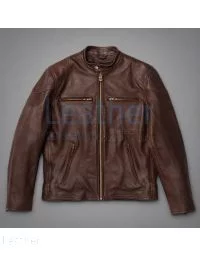
- Jackets. The surface is the garment, so look at grain and finish. Full-grain or good top-grain cowhide ages well. Browse our custom leather jackets to see how hides look when made up.
- Coats. Longer panels and more drape suit softer or thinner hides, but the same logic applies. See our men's leather coats.
- Race suits. Abrasion resistance and fit matter more than patina. The construction and the hide thickness count, and our guide to what race suits are made of explains it.
- Vests and bags. A bag takes constant handling, so a thicker full-grain hide earns its keep. See custom leather bags.
Our own grade
For made-to-order pieces, our suits are full-grain cowhide at 1.2-1.4 mm, most jackets are top-grain cowhide at 1.2-1.3 mm, and some women's jackets are milled cowhide. Each product page gives the exact hide and thickness. Hide grade also shows up in cutting and stitching: a consistent, well-chosen hide cuts and sews more evenly, while a weak or heavily corrected hide tends to stretch unevenly and hold seams poorly.
Why the layer matters when a jacket is made
The grade is not only a label question. It changes how leather behaves on the cutting table and under the needle. Grain-side hides keep their strength in the outer fibers, so they hold stitching well and recover from stretching at the elbows and shoulders. Splits are weaker, which is why they are normally backed with a coating. A maker choosing a hide also looks at how even the thickness is across the skin, how much of it carries scars or marks, and how well it takes the dye, because those decide how many panels can be cut from it and how well they match.
For buyers, the takeaway is simple. A garment priced well below similar ones is probably made from a lower layer, a thinner hide or a corrected surface, and it is worth asking which. A good seller answers plainly.
Care and aging
Follow the care label and the maker's instructions. The right product depends on the finish. Full-grain leather darkens and changes with use, so expect it to look different in a year, and treat that as a feature.
FAQs
Is genuine leather real leather?
Yes. It is made from animal hide, but the term is not a grade and does not promise quality. It often refers to split leather that has been heavily processed.
Is genuine leather good quality?
Not necessarily. It is usually below full-grain and top-grain. Ask for the hide type, the layer and the finish, and judge by those instead.
What is bonded leather made of?
Leather scraps and fibers bound together with adhesive and pressed onto a backing, then embossed to look like leather.
Is top-grain or full-grain better for a jacket?
Full-grain is generally considered the highest grade and ages with a patina. Top-grain gives a more uniform look and can be excellent. What matters most is the hide's thickness, the finish and the quality of construction.
How can you tell if a jacket is genuine leather?
Look at the surface and the edges. Real hide shows natural variation and a fibrous cut edge, while imitation looks uniform with a fabric or plastic edge. Check the product description, and ask the seller if it is unclear.
Does bonded leather last?
Generally not as long as real hide. The coating can crack and peel, especially at flex points like elbows and cuffs.
To see how cowhide looks in finished clothing, browse our custom leather jackets, made to your measurements.