
 USA
 Canada
 Brazil
 Germany
 France
 Italy
 Switzerland
 Sweden
 Spain
 Norway
 Russia
 South Africa
 Japan
 New Zealand
 Australia

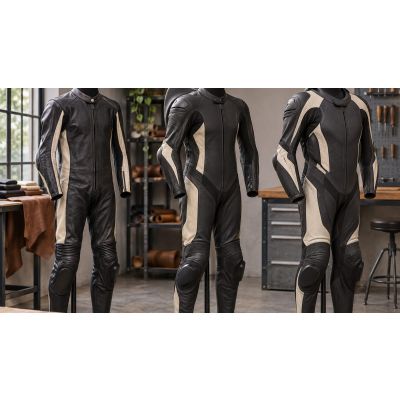
Short answer: between 2011 and 2026 MotoGP leathers changed mainly in three ways: airbag systems went from optional to compulsory, the back hump became a housing for electronics, and Saturday sprint races arrived in 2023. Use the table in this guide to jump to the year you want and the replica collection for that season. Last checked: November 2026.
How to use this guide
We build replica race suits for each MotoGP season, and each season has its own category: for example 2011 MotoGP suits through 2026 MotoGP suits. This page puts those collections in order and explains what was changing in the suit from year to year. If you only want the current season, go straight to the MotoGP 2026 collection. For everything at once, browse MotoGP gear.
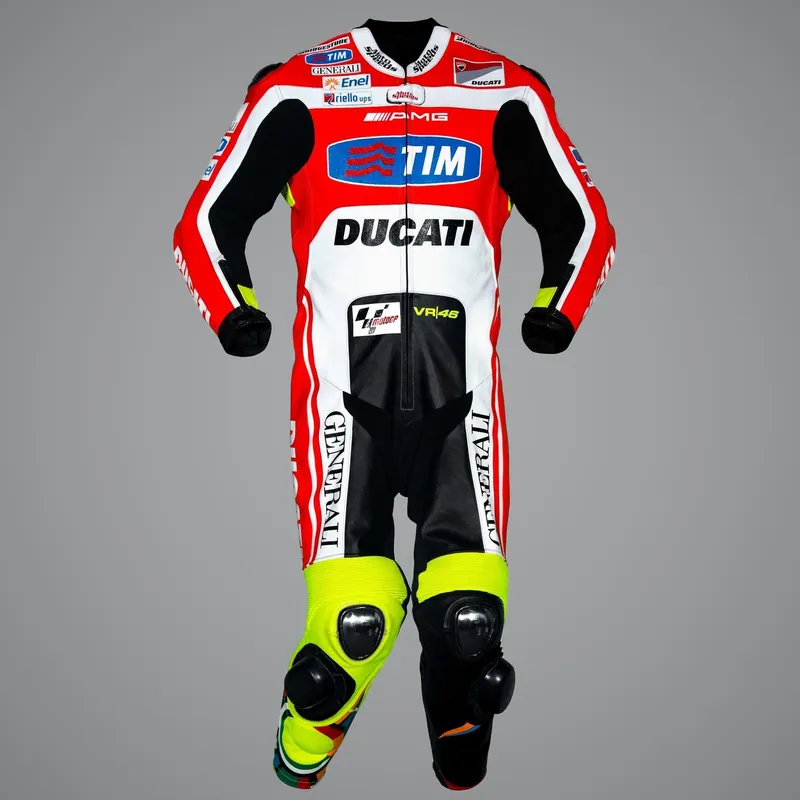
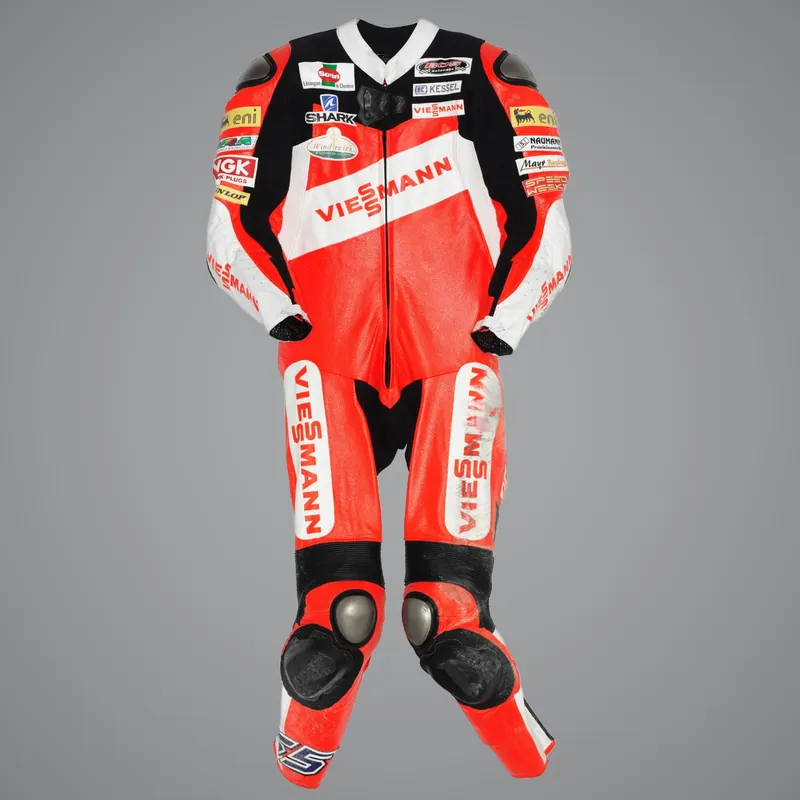
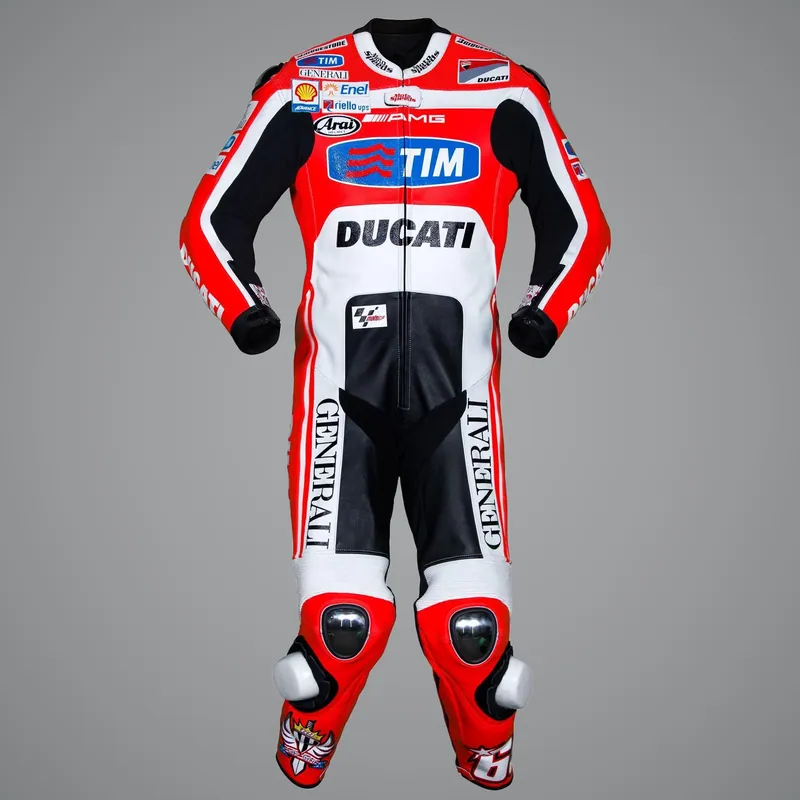
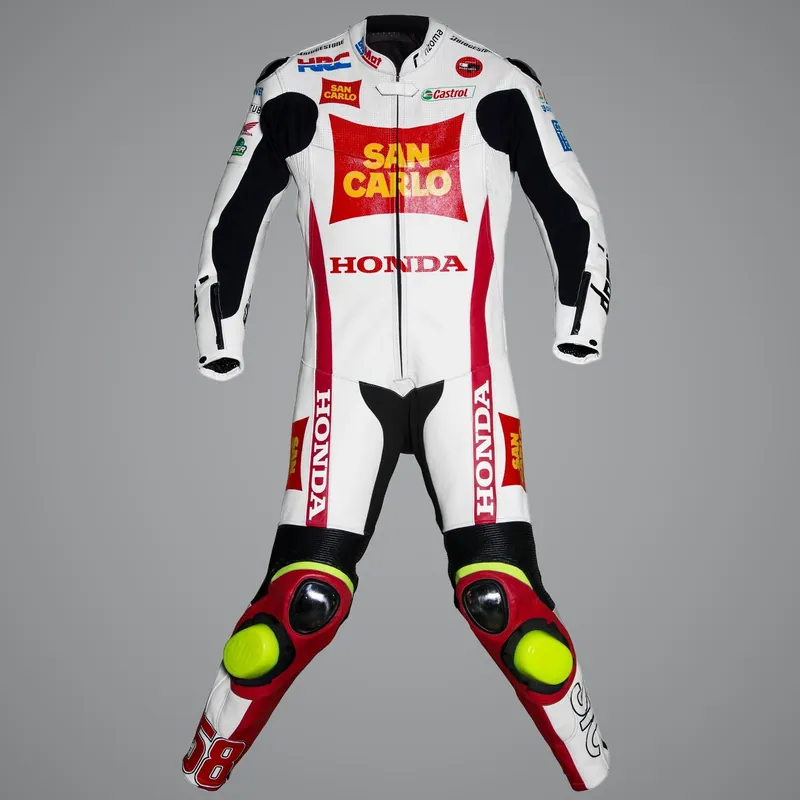
A word on scope. This is a guide to suits, not a results history. Dates are given at era level. We also do not use official logos or studio photos: the images in our collections are our own renders of replica designs.
2011 to 2014: the traditional era
These seasons are the last of the "classic" look. Suits were mostly cut from leather panels with a clean back, with sponsor logos and rider names printed or stitched across them. Much of the visual identity came from the team colors and the rider's own helmet and number. Airbag suits already existed in the paddock in these years, but wearing one was a rider's choice, not a rule.
What to look for in a replica from this period:
- A smoother back panel without a pronounced hump.
- Bold, simpler color blocking by team.
- Name and number placement matching the rider's season.
Browse the 2011 collection for the start of this range, then step through the later year categories from the same menu.
2015 to 2018: airbags go from optional to compulsory
This is the period when airbag technology moved from an add-on to part of the suit. Systems are built into the suit so that, in a fall, the airbag inflates around the torso and neck area. That changes how a suit is cut, because it needs room and routing for the system. The rule change came in 2018: the FIM made airbag-equipped leathers compulsory in MotoGP, Moto2 and Moto3, with limited exceptions for wildcard and replacement riders (Crash.net report).
For a replica buyer, the key point is that an airbag-equipped team suit and a replica are different products. A replica copies the look, and what it includes depends on the maker. We cover this in detail below, and in our guide to how replica suits are built and sized.
2019 to 2022: the airbag era settles in
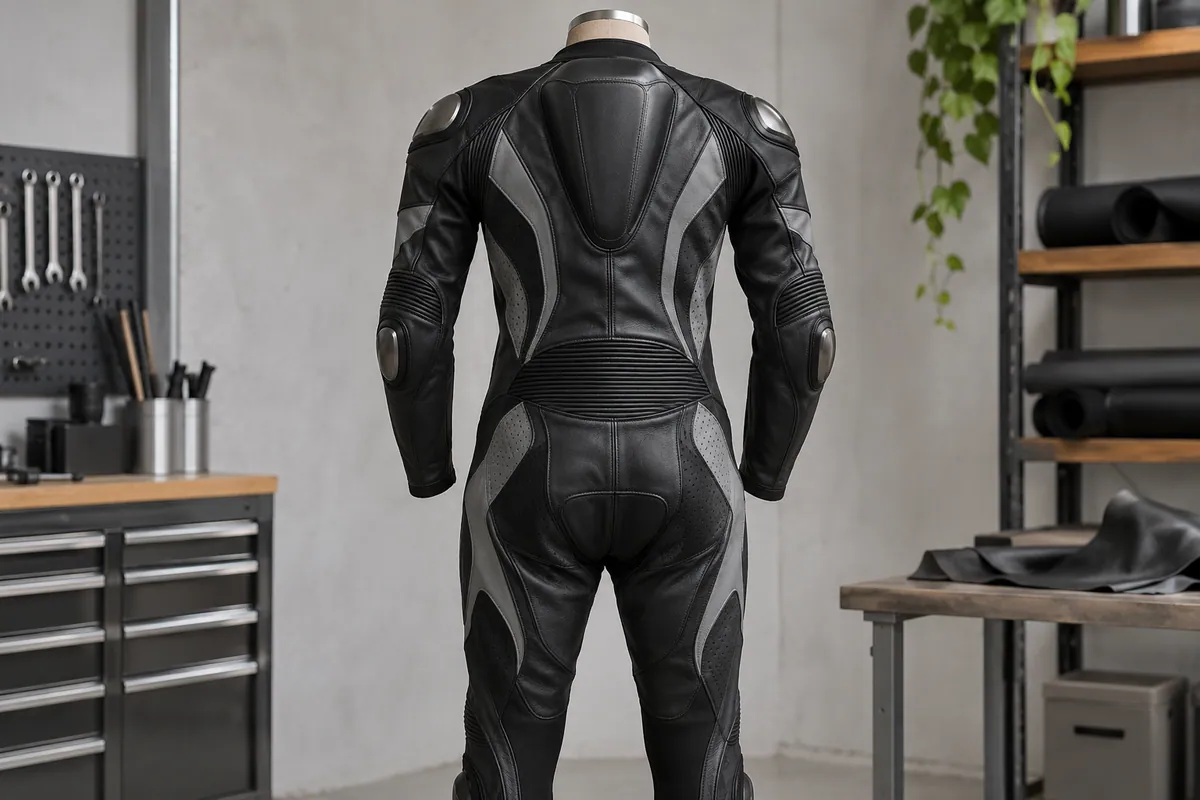
With airbags now compulsory, every rider on the grid wore one. The raised hump on the upper back is not new: MotoGP's own site says it appeared in the late 1980s and early 1990s to cut drag in the tuck, and today it also holds items such as the airbag electronics (MotoGP.com). What changed in these seasons is that the whole suit was designed around those systems.
If you want this look, check that the product page for the suit shows the hump. Our leather race suits range covers one-piece and two-piece designs, and the choice matters for fit and comfort.
2023 to 2026: the current era
Since 2023 every Grand Prix weekend has included a Saturday Sprint, announced by the FIM, IRTA, MSMA and Dorna in August 2022 (MotoGP.com). Suit designs have kept changing from year to year, and the 2026 season is the newest category on our site. The detail that matters when buying is season accuracy: sponsor placement and color blocking differ between 2024, 2025 and 2026, so choose by year, not just by rider.
Start from the 2026 MotoGP suits and the wider 2026 collection, which also includes jackets and gloves.
Year-by-year table
Each row links to that season's replica collection. The era column is a guide to what was changing around the suit at the time, not a list of rider results.
| Year | Suit era | Collection |
|---|---|---|
| 2011 | Classic cut, airbags optional | MotoGP 2011 suits |
| 2012 | Classic cut, airbags optional | MotoGP 2012 suits |
| 2013 | Classic cut, airbags optional | MotoGP 2013 suits |
| 2014 | Classic cut, airbags optional | MotoGP 2014 suits |
| 2015 | Airbags spreading, still optional | MotoGP 2015 suits |
| 2016 | Airbags spreading, still optional | MotoGP 2016 suits |
| 2017 | Airbags spreading, still optional | MotoGP 2017 suits |
| 2018 | Airbags compulsory | MotoGP 2018 suits |
| 2019 | Airbag era | MotoGP 2019 suits |
| 2020 | Airbag era | MotoGP 2020 suits |
| 2021 | Airbag era | MotoGP 2021 suits |
| 2022 | Airbag era | MotoGP 2022 suits |
| 2023 | Sprint races begin | MotoGP 2023 suits |
| 2024 | Sprint era | MotoGP 2024 suits |
| 2025 | Sprint era | MotoGP 2025 suits |
| 2026 | Sprint era | MotoGP 2026 suits |
For rider-specific posts from each season, see the MotoGP leathers collection and the rider guides on our blog.
Replica vs original: what is and is not in the box
A replica copies the look of a rider's suit for a given season. It does not copy the team's technology. In general:
- Usually the same: colors, layout, number and name styling, overall silhouette, hump shape where the design has one.
- Usually different: airbag system, sponsor rights, the exact leather and any custom engineering made for the rider.
- Depends on the product: armor level and placement, lining, and whether the suit is meant for track riding, street riding or display. Our MotoGP replica suits are our own designs inspired by the season, not made or endorsed by teams or riders. For example, the Valentino Rossi 2010 Fiat Yamaha suit comes with removable CE Level 1 armor and a back pocket for an optional EN 1621-2 back protector, and you can add a speed hump. Sponsor logos are printed, or embroidered or stitched as patches, and cannot be left off or changed.
If you plan to ride in a replica, read the product page carefully for the armor details. Our suits have removable CE Level 1 armor (EN 1621-1) but no whole-garment EN 17092 class. Our comparison of replica vs custom race suits will help you decide. The history of why leathers look the way they do is in how the race suit changed from wool to kangaroo.
How to pick the right year
- Pick the rider and the season you remember: the livery is tied to the year.
- Open that year's category and compare the layout, number and sponsor placement.
- Choose one-piece or two-piece.
- Decide whether you need a riding suit or a display or costume piece, and read the product page for the protection spec.
- Check the size chart or choose made-to-measure.
How to compare two seasons side by side
When two seasons look alike at a glance, these are the details that separate them. Open both year categories and compare each point.
| Detail | What to compare |
|---|---|
| Main colors | Base color and the proportion of accent colors on the chest, shoulders and legs |
| Panel lines | Where seams and panels divide the colors, which often shift between seasons |
| Back shape | Flat back or raised hump, and how big |
| Name and number | Position, size and font of the rider name and race number |
| Sponsor layout | Where partner names sit on the arms, chest and legs |
| Trim and piping | Edge colors around panels and cuffs |
| Fit | Slim race cut or relaxed cut, one-piece or two-piece |
Most collectors find that the back shape and panel lines identify a season faster than the colors do. If two suits have the same colors but a different back, they are probably from different years.
Which year should you start with?
If you are not sure which season to choose, start from your reason for buying.
- You want the suit from a rider's title season. Search the year category for the season in question. The suit belongs to that year even if the rider wore different colors the season after.
- You want the current look. Go to the 2026 collection.
- You want a classic. Earlier years, from 2011 on, have a cleaner back and simpler layouts, which many people prefer for display or everyday jackets.
- You want a track suit with a hump. The later seasons in the table show the hump, which also affects how the suit sits in a riding tuck.
- You are buying a gift. Pick the rider and season the recipient follows, then choose a jacket if you are unsure about size.
How the leather itself has changed
The big visible changes are in the design, but the leather is part of the story too. Race suits have long used cowhide and kangaroo leather, because both give abrasion resistance at a manageable weight. Kangaroo leather is thin and strong, which lets a suit be lighter, and cowhide is a more common and more affordable choice. Our history of how the race suit changed from wool to kangaroo covers the longer arc. Our replica suits are made in cowhide as standard (for example, 1.2-1.3 mm on the Valentino Rossi Fiat Yamaha 2010 replica), with Monaco or kangaroo leather as paid upgrades.
Alongside the leather, the technical features around it have expanded: stretch panels in the knees, back and underarms; perforated sections for heat; and built-in or removable armor. For the replica buyer, the point is simple. Two suits that look the same on a screen can be built from very different materials, so read the specification, not just the picture.
A short glossary of race suit terms
Race suit descriptions use a few terms repeatedly. Knowing them makes a collection page much easier to read.
- One-piece suit: a single garment from neck to ankle, the standard for track riding and the usual choice for a faithful replica.
- Two-piece suit: a jacket and pants that zip together, which is easier to put on and more flexible for street riders.
- Aero hump: the raised shape on the upper back. On a replica it is a styling and fit feature, and on team suits it began as a way to reduce drag in the tuck and now also houses electronics.
- Stretch panels: flexible sections behind the knees, under the arms and across the back so the suit moves with a rider in a tuck.
- Perforation: small holes in the leather for airflow in hot weather. Perforated areas reduce abrasion resistance in those spots, so placement matters.
- Knee sliders: replaceable pucks on the knees that touch the ground in corners and wear down over time.
- Armor: removable or built-in protectors at shoulders, elbows, knees and back. Ask for the stated level and where it was tested.
Our guide to 1-piece vs 2-piece race suits goes through the trade-offs in more detail.
What to check on a replica's product page
Before you buy a suit from any season, read the product page against this list.
- Season and rider: does the title name the year? Sponsor layouts and colors change between seasons.
- Cut: one-piece or two-piece, with or without a hump.
- Leather: the type and, if stated, the thickness.
- Protection: what armor is included and where it sits. Our armor is CE-rated (EN 1621-1); our suits carry no whole-garment EN 17092 class.
- Airbag: whether one is included or can be added. Our replicas do not include an integrated airbag system, but a race suit can be cut with room for your own airbag vest.
- Sizing: standard sizes or made-to-measure, and how to measure.
- Use: track, street, display or costume.
If something is not stated, ask before ordering. A seller should be able to say plainly what the suit includes.
Three common mistakes when buying by season
- Choosing by rider only. A rider changes team and livery from one year to the next, so the suit you remember might belong to a different year than the one you searched for.
- Assuming a replica has team-level technology. A replica is a copy of the look, not of the engineering inside a factory suit.
- Buying a display piece for riding. Some suits are made for collectors or costume use. If you plan to ride, choose a riding spec and confirm it.
Suits for jackets, gloves and the rest of the kit
Not everyone wants a full suit. The same seasons are available as jackets, which are easier to wear on the street, and many riders pair a jacket with plain pants. The MotoGP replica jackets collection is the place to start. Gloves and boots from each year's collection let you match the full look. If you need a fit that off-the-rack sizes cannot give, a custom race suit built to your measurements is the alternative to a standard replica.
Looking after an older replica
If you own or plan to buy a suit from an earlier season, a few habits keep it looking right for years. Store it on a wide hanger, or flat in a breathable bag, away from heat and sunlight, which fade colors and dry leather. Do not leave a suit folded for long periods, because creases set in the panels. Condition the leather lightly once or twice a year, following the care label, and test any product on a hidden area first. Printed and stitched sponsor graphics should be wiped, not scrubbed. Our guide to caring for leather gear covers the basics.
Why replicas from different seasons look so different
If you place a 2011 suit next to a 2026 suit, the difference is clear even before you look at colors. The older suit has a simpler silhouette, fewer panels and cleaner lines. The newer suit has more complex paneling, a shaped back and more fitted cuts around the arms and knees. Part of this is fashion, and part is function: as protection and aerodynamics became a bigger part of design, the suits had to be cut to carry them.
For buyers, this means a few practical points. Newer designs tend to have more panels, which means more seams and more places for the color layout to go wrong, so check the product images closely. Older designs are simpler to reproduce accurately and often work better as a jacket or as a display piece. And whichever era you choose, ask whether the suit is made for riding or for show before you order. See the product page for the specifications of each suit.
FAQs
How have MotoGP suits changed over the years?
Mainly through airbag systems built into the suit (compulsory since 2018), a back hump that now houses electronics, and sponsor liveries that change every season. The leather itself has remained the core material.
When did MotoGP riders start wearing airbag suits?
Airbag suits were in use in Grand Prix racing by the late 2000s, and the FIM made them compulsory in MotoGP, Moto2 and Moto3 from the 2018 season.
Where can I find a replica MotoGP suit from a specific year?
Each season has its own category, for example MotoGP 2011 suits and MotoGP 2026 suits. The MotoGP gear page links to them all.
Why do some MotoGP suits have a hump?
The hump on the back began in the late 1980s and early 1990s as a way to reduce drag in the tuck, and on team suits it now also houses technology. Replica suits can copy the shape for authenticity.
Are replica MotoGP suits safe to ride in?
That depends on the specific suit. Our suits have removable CE Level 1 armor (EN 1621-1) and no whole-garment EN 17092 class; the product page lists the armor and construction. A replica is not the same as a team suit with an integrated airbag.
Pick your season at MotoGP gear, or go straight to the 2026 collection.