
 USA
USA  Canada
  Brazil
  Germany
  France
  Italy
Italy  Switzerland
  Sweden
  Spain
Spain  Norway
  Russia
  South Africa
  Japan
Japan  New Zealand
  Australia
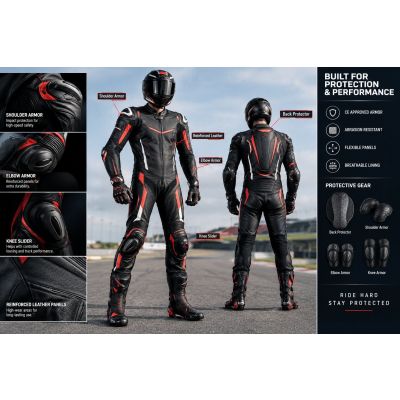
When you're riding at high speed, whether on the track or pushing limits on the road, your motorcycle racing suit protection becomes your only barrier between your skin and asphalt. A high-speed crash happens in seconds, but the forces involved can cause severe abrasion and impact injury in milliseconds. Understanding what makes a racing suit truly protective—not just stylish or comfortable—is the foundation of making a safer buying decision. This guide breaks down the real safety features that matter, how they work together, and what riders should verify before choosing protective gear.
Quick Answer
A suitable motorcycle racing suit for high-speed riding combines reinforced leather with tested abrasion resistance, strategically placed impact armor, proper fit that keeps protection in place during movement, reinforced stitching in high-stress zones, and compliance with recognized safety standards like EN 17092 for the garment and EN 1621 for armor. The suit must fit snugly without restricting on-bike movement, keep armor aligned during slides, and use materials rated for the speeds and conditions you ride.
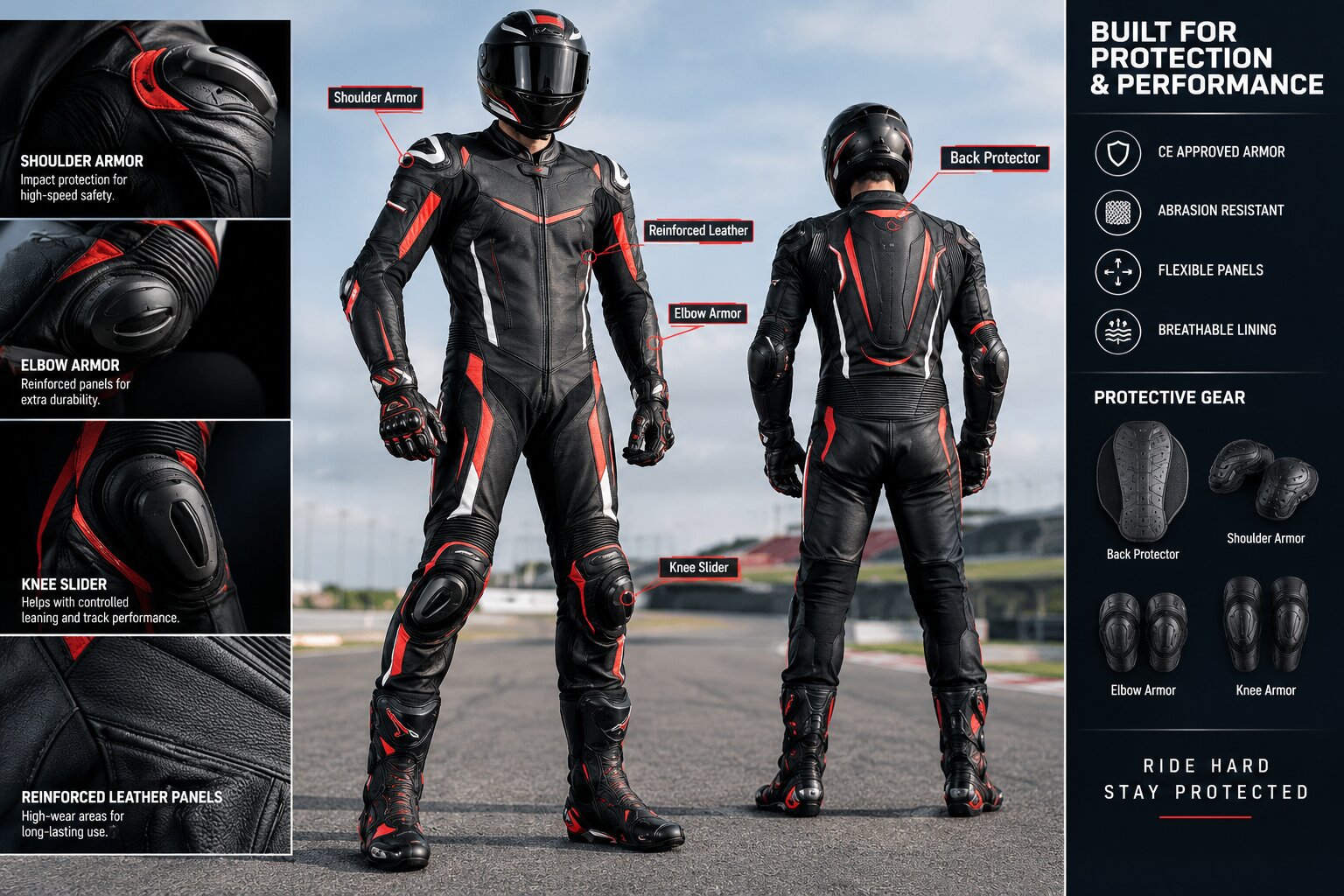
Table of Contents
- What Does Racing Suit Protection Mean for Rider Safety?
- Abrasion and Impact Protection: The Two Core Safety Features
- Why Fit and Armor Placement Matter More Than You Think
- Materials, Stitching, and Safety Standards Explained
- Common Mistakes Riders Make When Choosing Racing Suits
- What Riders Should Check Before Buying a Racing Suit
- When Should You Upgrade to a High-Performance Racing Suit?
What Does Racing Suit Protection Mean for Rider Safety?
A motorcycle racing suit is engineered to do one job: reduce injury risk during high-speed slides and crashes. Unlike casual riding jackets, a racing suit covers your entire body with reinforced protection zones. It's designed to withstand repeated abrasion against pavement, dissipate impact energy through armor, and stay in place during violent motion.
When you slide at 60 mph, your body experiences friction that can strip away skin in fractions of a second. A quality racing suit delays that damage by providing thick, durable leather and protective panels. At the same time, strategically placed armor absorbs and spreads impact force across wider areas of bone and muscle, reducing localized injury.
The key word is reduces. No suit eliminates crash risk. High-speed impacts remain dangerous, and severe crashes can still cause serious injury even in the best protective gear. The suit's job is to shift the odds in your favor by giving your body more time and more material between you and the road.
Abrasion and Impact Protection: The Two Core Safety Features
Motorcycle racing suit protection works through two separate but equally important mechanisms: abrasion resistance and impact protection. Understanding the difference helps you choose gear that matches your riding.
Abrasion resistance is how well leather and seams resist being worn away by friction against pavement. Thicker leather, higher-quality hides, and reinforced stitching all improve abrasion performance. A suit rated AA under EN 17092 indicates tested abrasion resistance under that standard, meaning it has been measured for how long the material survives high-friction testing. This is critical for street and track riding where slides are common.
Impact protection is the armor's job. Separate from the garment itself, armor pieces (shoulders, elbows, knees, back, chest) are tested under EN 1621 for how well they absorb shock. Level 1 armor is designed for lower-speed impacts; Level 2 armor is tested for higher-speed and repeated impacts. The armor absorbs energy and spreads it over a larger area, reducing the peak force your body experiences.
A high-speed crash involves both. Your body slides and scrapes (abrasion), and you also hit the road or objects with force (impact). A racing suit must excel at both to be truly protective.
Why Fit and Armor Placement Matter More Than You Think
The best armor in the world is useless if it shifts out of position during a crash. Fit is not just about comfort—it's a safety feature.
When you're on the bike, your body is in a forward, tucked position. Your shoulders lean forward, your elbows bend, your knees angle. A racing suit must fit snugly enough in that position to keep armor directly over vulnerable joints. If the suit is too loose, armor can slide sideways or upward during impact, leaving joints exposed. If it's too tight, you'll fight the suit while riding, which causes fatigue and reduces control.
Custom-fitted suits solve this problem by building the fit around your exact body measurements and riding position. A rider who is 5'8" with long arms needs different proportions than a rider who is 6'2" with a stocky build. Off-the-rack suits use average sizing, which works well for riders near those averages but can leave others with poor armor alignment.
Armor placement also matters. Shoulders need protection where you typically impact—usually the ball of the shoulder and upper arm. Elbows need armor on the outer point. Knees need coverage on the kneecap and sides. Back protection should cover the spine and ribs. Check where armor sits on your body when you're in riding position, not standing still. Many riders buy a suit, put it on standing up, and assume the armor is in the right place. Then they get on the bike and the armor shifts.
Materials, Stitching, and Safety Standards Explained
Leather quality varies widely. Not all leather is equally abrasion-resistant. Thicker, full-grain leather from high-quality hides resists tearing and abrasion better than thin or split leather. Garment makers often use leather thickness (measured in mm) and hide grade to indicate quality, but the best way to verify is to check the product specifications and safety certifications.
Stitching is where many suits fail. A single-stitched seam can tear open during a slide, exposing the padding underneath. Racing suits use reinforced double or triple stitching in high-stress zones—seams that cross the shoulders, elbows, knees, and waist. Some suits use bartacking (a dense, reinforced stitch pattern) at stress points. This matters because a torn seam means the armor can separate from your body, and the leather protection is compromised.
Safety standards provide a common language. EN 17092 is the European standard for motorcycle clothing (jackets, trousers, suits) and rates garments into classes AAA, AA, A, B, and C based on abrasion resistance, tear strength, and seam strength. The AA class indicates a higher level of abrasion and tear performance than A. However, the EN 17092 class is not a measure of impact protection—it measures the garment's durability against friction and tearing. Impact protection is rated separately under EN 1621 for the armor itself.
EN 1621-1 covers limb armor (shoulders, elbows, knees); EN 1621-2 covers back protectors. Armor is rated Level 1 or Level 2 based on impact energy absorption. Level 2 indicates higher-speed impact protection. A suit can have an AA garment rating and Level 2 armor, or AA with Level 1 armor—they're independent certifications.
Always check the product label, hang tags, and manufacturer documentation for exact certifications. Leather Collection and other reputable makers clearly mark their safety ratings so you can verify what you're buying.
Common Mistakes Riders Make When Choosing Racing Suits
One of the biggest mistakes is prioritizing style or brand name over fit. A suit that looks aggressive but doesn't fit your body well will move during riding, shifting armor away from joints and creating comfort problems that distract you from the road or track.
Another mistake is assuming a higher price tag always means better protection. Some expensive suits prioritize fashion or brand prestige over safety features. Compare actual armor coverage, stitching quality, and certifications rather than just price or aesthetics.
Riders also often overlook armor coverage gaps. A suit might have shoulder and elbow armor but leave your ribs and sides exposed. For track riding, full-body coverage including back protection is worth considering. For street riding, you might prioritize different zones based on your typical fall patterns.
Buying a suit "to grow into" is another common error. A loose suit doesn't protect as well because armor shifts during impact. If you're between sizes, choose the size that fits your current body, or invest in custom tailoring to get the fit right.
Finally, riders sometimes neglect to inspect gear after a crash. Even if you didn't notice visible damage, armor can crack internally, stitching can be stressed, and leather can be compromised. After any significant slide or impact, have the suit inspected or serviced by the manufacturer or a qualified leather repair specialist. Damaged gear may need repair or replacement to maintain protection.
What Riders Should Check Before Buying a Racing Suit
Before committing to a motorcycle racing suit, verify these safety and fit factors:
Armor coverage: Confirm what armor is included (shoulders, elbows, knees, back, chest, hips). Check the armor type and EN 1621 rating. Some suits use removable armor; verify it fits securely and won't shift during riding.
Garment certification: Look for an EN 17092 rating (AA is common for quality racing suits). This tells you the leather and stitching have been tested for abrasion and tear resistance. Check the product documentation or label.
Leather quality: Ask about leather thickness, hide grade, and source. Thicker, full-grain leather from reputable tanneries offers better abrasion resistance. Product details should specify these.
Stitching inspection: Examine seams, especially at shoulders, elbows, waist, and knees. Look for reinforced or double stitching. Run your finger along seams—they should feel solid, not loose or uneven.
Fit in riding position: Try the suit on, then get into your typical riding posture (forward, tucked, elbows bent, knees angled). Armor should sit directly over joints. The suit should feel snug but not restrictive. You should be able to grip the bars and work the controls without fighting the suit.
Stretch panels: Check for stretch leather or mesh panels at the sides, underarms, and back. These allow movement without reducing protection. A suit that's too stiff will fatigue you and reduce control.
Slider placement: Many racing suits include sliders (reinforced pucks) on the hips, knees, and sometimes shoulders. These reduce friction and protect high-contact areas during slides. Verify they're positioned where your body typically makes contact.
Riders who want better protection for track, road, and city riding can explore our
for gear designed around safety, fit, and performance-driven comfort.When Should You Upgrade to a High-Performance Racing Suit?
If you're wearing a casual riding jacket or mesh gear and you're starting track days, upgrading to a full racing suit is a smart move. Track riding involves higher speeds and more predictable crash scenarios, so a suit built for those conditions makes sense.
If your current suit is damaged—torn seams, cracked armor, worn leather—replacement or repair is worth considering. Damaged gear loses protection value. A professional inspection can tell you whether repair is practical or if replacement is safer.
If you're moving from street riding to regular track use, a suit with full-body armor (including back protection) and higher abrasion ratings (AA or AAA) is a logical upgrade. Track crashes often involve higher speeds and more violent impacts than street riding.
If you've outgrown your current suit or your fit has changed significantly, a new suit or custom tailoring ensures armor stays aligned and protection remains effective. Ill-fitting gear is less protective, regardless of how good the materials are.
If you ride year-round or in varying conditions, you might consider multiple suits: a heavier, fully armored suit for track and cold-weather road riding, and a lighter, more flexible suit for summer street riding. Each can be optimized for its intended use.
How High-Speed Riding Demands Change Your Gear Choices
High-speed riding—whether on track or aggressive road riding—creates unique protection demands. At 80+ mph, slides happen faster and with more force. Impact zones are more severe. Your body experiences higher friction and greater deceleration.
This is why track riders and sportbike enthusiasts prioritize full-body coverage, high-quality abrasion resistance, and Level 2 armor. A casual city rider might prioritize comfort and flexibility; a track rider prioritizes protection and armor security. Your choice should match your actual riding style and speeds.
For riders comparing real protective gear and performance-focused construction, the
shows how armor placement, reinforced stitching, and fit work together to support safer high-speed riding decisions.Final Takeaway: Making an Informed Choice
A motorcycle racing suit suitable for high-speed riding combines thick, quality leather, reinforced stitching, properly positioned armor, and a fit that keeps protection in place during movement. Understanding EN 17092 abrasion ratings, EN 1621 armor levels, and the difference between garment durability and impact protection helps you compare suits accurately.
The best suit is one that fits your body, matches your riding speed and conditions, carries recognized safety certifications, and feels secure when you're in riding position. Take time to verify fit, check armor coverage, and inspect stitching before buying. After any significant crash or slide, have the suit inspected to ensure protection remains intact.
Protective gear reduces injury risk during high-speed riding, but it's not a substitute for rider skill, awareness, or safe choices on the road or track. Use your racing suit as part of a complete safety approach: proper technique, defensive riding, appropriate speeds for conditions, and regular maintenance of both your gear and your bike. When you combine quality protective gear with smart riding decisions, you're supporting safer high-speed riding and better outcomes if a crash does occur.
Frequently Asked Questions
What's the difference between EN 17092 and EN 1621 safety ratings?
EN 17092 rates the garment itself (leather, stitching, tear strength, abrasion resistance) and assigns classes AAA, AA, A, B, or C. EN 1621 rates the armor (shoulder, elbow, knee, back protectors) for impact absorption and assigns levels 1 or 2. A suit can have an AA garment rating with Level 1 armor, or AA with Level 2—they're independent certifications that together describe the suit's full protection profile.
Does a thicker leather suit always provide better protection?
Thicker leather generally offers better abrasion resistance, but thickness alone isn't the complete answer. Leather quality, hide grade, tanning method, and stitching all matter. A well-made suit from quality leather may outperform a thicker suit made from lower-grade hides. Check the product specifications and certifications rather than assuming thickness is the only factor.
Can I wear a racing suit for everyday street riding?
Yes, many riders wear racing suits for street riding because the protection is excellent. However, full racing suits can be warm in summer and may be stiffer than casual jackets, which some riders find less comfortable for casual commuting. Some riders use a racing suit for spirited or longer rides and a lighter jacket for city commuting. Choose based on your typical speeds, distances, and comfort preferences.
How do I know if my racing suit still protects after a crash?
After any significant impact or slide, have the suit inspected. Look for torn seams, cracked armor, separated padding, or scuffed leather that has worn through protective layers. Internal armor damage isn't always visible, so a professional inspection by the manufacturer or a qualified leather specialist is recommended. Damaged gear may need repair or replacement to maintain protection.
What's the advantage of a custom-fitted racing suit over off-the-rack?
Custom suits are built to your exact body measurements and riding position, which ensures armor aligns properly with your joints and the suit fits snugly without restricting movement. Off-the-rack suits use average sizing, which works well for riders near those averages but can leave others with poor fit and shifted armor. If you're significantly taller, shorter, or have unusual proportions, custom sizing improves both protection and comfort.
Should I prioritize full-body armor or can I skip some zones?
Track riding benefits from full-body armor including back protection. Street and road riding might prioritize shoulders, elbows, knees, and hips based on typical fall patterns. Consider your actual riding speeds, environment, and crash scenarios. A suit without back protection leaves your spine and ribs vulnerable in certain crash types. Check what armor coverage comes with each suit and decide what matches your risk profile.
How often should I replace my racing suit?
Lifespan depends on use and care. A suit used regularly for track days may need replacement every few years; a suit used occasionally for street riding might last longer. Inspect regularly for wear, damage, and armor integrity. After crashes, have the suit serviced. When stitching fails, armor cracks, or leather degrades significantly, replacement or professional repair becomes necessary to maintain protection.