
 USA
USA  Canada
  Brazil
  Germany
  France
  Italy
Italy  Switzerland
  Sweden
  Spain
Spain  Norway
  Russia
  South Africa
  Japan
Japan  New Zealand
  Australia
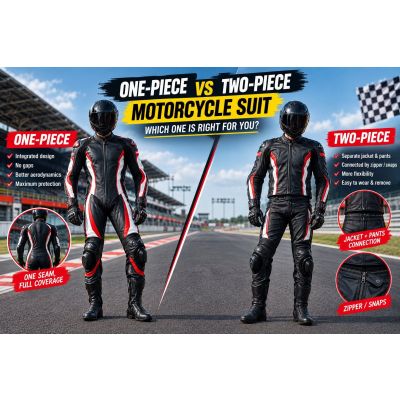
Track riders and performance-focused motorcycle enthusiasts often face a critical gear decision before heading to the circuit: should you choose a one-piece motorcycle leather suit or a two-piece racing suit? This choice affects your safety, comfort, mobility, and how well your protective gear performs during high-speed riding and potential crash scenarios. Understanding the real differences between one-piece and two-piece motorcycle leathers helps you make a decision based on your riding style, track experience, and personal priorities rather than assumptions or brand loyalty.
The comparison between one-piece vs two-piece motorcycle leathers matters because both options serve serious riders, but they excel in different situations. A one-piece suit offers integrated protection, simplified fit, and streamlined aerodynamics. A two-piece setup provides flexibility, easier pit-lane transitions, and practical everyday versatility. Neither option is universally "better"—the right choice depends on whether you prioritize pure track performance or need gear that works both on and off the circuit.
Quick Comparison Answer
Choose a one-piece motorcycle leather suit if you race on track, want seamless protection with no gaps, prioritize aerodynamics, and don't need to remove gear between sessions. Choose a two-piece motorcycle racing suit if you ride street and track, need to step away from the bike during pit stops, want easier bathroom and gear adjustment access, or prefer gear that works for casual riding too. One-piece suits deliver maximum integrated protection and performance focus. Two-piece setups balance track safety with practical everyday usability. Your decision should factor in track time frequency, fit in riding position, armor coverage, certification standards, and whether you need the gear to work off the motorcycle.
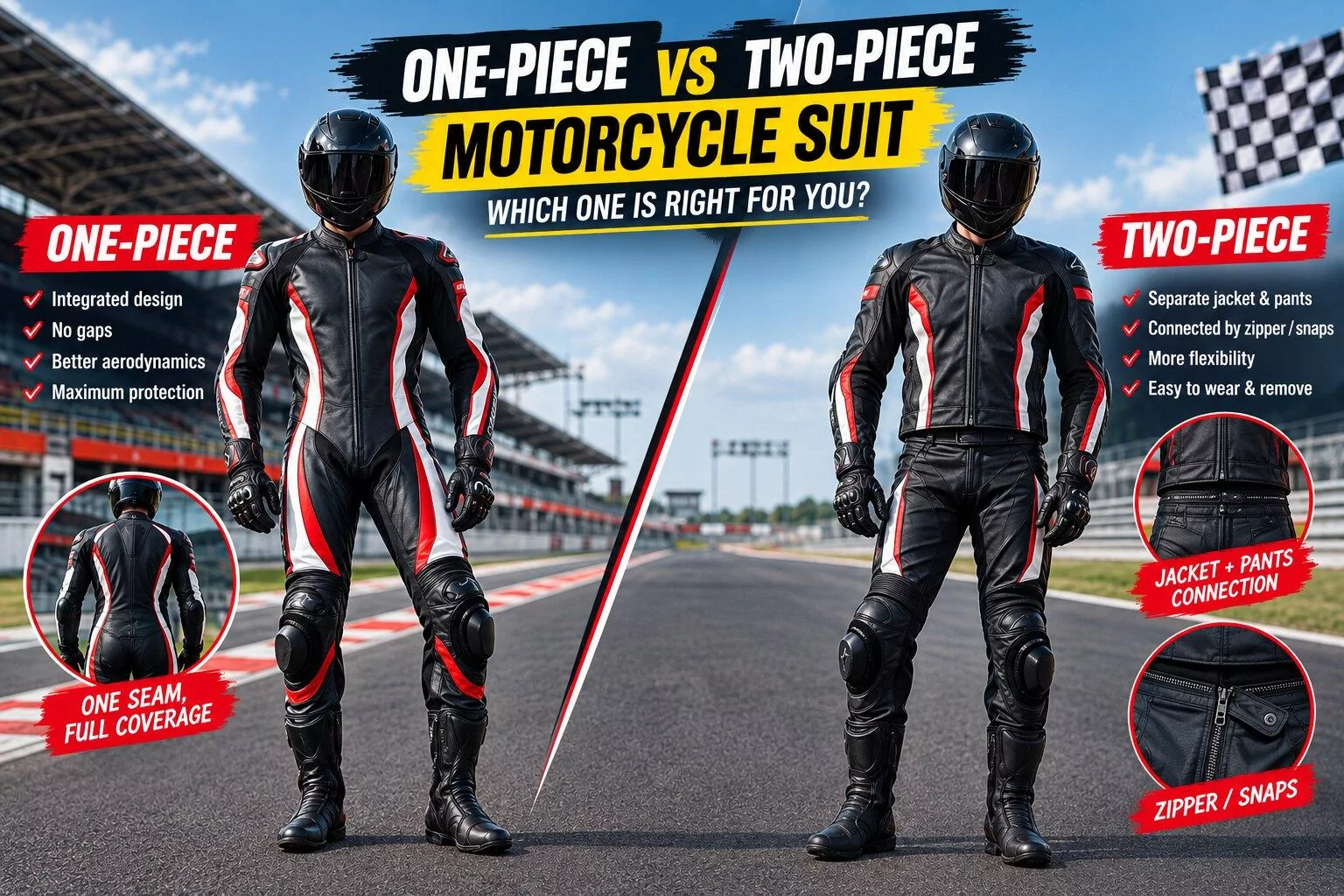
Table of Contents
- What Is the Main Difference Between One-Piece and Two-Piece Motorcycle Leathers?
- Which Option Offers Better Track Rider Protection?
- Which Option Feels More Comfortable on the Bike?
- Which Option Is Better for Track-Only Riding?
- Which Option Works Better for Street and Track Riding?
- Why Fit and Armor Placement Matter More Than Suit Style
- Which Option Gives Better Long-Term Value?
- Pros and Cons of One-Piece and Two-Piece Motorcycle Leathers
- Common Comparison Mistakes Riders Should Avoid
- Which Option Should You Choose?
- Final Comparison Advice from Leather Collection
What Is the Main Difference Between One-Piece and Two-Piece Motorcycle Leathers?
The core difference is structural. A one-piece motorcycle leather suit is a single integrated garment that covers your torso, arms, and legs as one continuous piece. A two-piece motorcycle racing suit consists of a jacket and pants that connect via a zipper or snap system but can be separated.
One-piece suits are designed to stay together during riding. The fit is engineered around the riding position, with panels and stretch zones positioned to move with your body when seated on the bike. There are no gaps between the jacket and pants, so abrasion protection remains continuous even during aggressive movement or a slide.
Two-piece suits offer separate components. You can wear the jacket and pants together as a matched set, or wear them separately for different riding situations. The connection between pieces is secure when zipped or snapped, but the design allows for easier removal and adjustment. This flexibility makes two-piece gear more practical for riders who need to step off the bike frequently or want to wear the pieces in different combinations.
Which Option Offers Better Track Rider Protection?
Protection depends more on material quality, armor specification, fit, and certification than on whether the suit is one-piece or two-piece. Both options can deliver strong protective coverage when properly constructed and correctly fitted.
One-piece suits have an inherent advantage in integrated protection. Because the jacket and pants are one continuous garment, there is no gap between pieces. During a slide or crash, the suit moves as a single unit, and abrasion protection extends across the entire body without interruption. The riding-position fit is engineered into the suit from the factory, so armor placement is typically optimized for the seated riding posture.
Two-piece suits can also provide excellent protection, but the quality of the connection matters. A secure zipper or snap system keeps the pieces together during normal riding and most crash scenarios. However, if the fit is poor or the connection loosens, small gaps can develop. Armor placement depends on how well each piece fits individually and how they align when connected. A poorly fitted two-piece setup may have armor that shifts or separates from the body during impact.
The real protection comparison comes down to these factors: material thickness and quality, armor type and placement, EN 17092 garment rating, EN 1621 armor certification, how well the suit fits in your riding position, and whether armor stays correctly positioned during movement and braking. Both one-piece and two-piece motorcycle leathers can meet high safety standards. The difference is fit and construction quality, not the suit style itself.
Impact Protection and Armor Standards
Motorcycle leather racing suits are rated under EN 17092, which measures abrasion resistance, tear strength, and seam strength of the whole garment. This standard does not measure impact protection. Impact protection comes from CE-certified armor, rated under EN 1621. Armor is classified as Level 1 or Level 2 based on impact performance.
A one-piece suit with high-quality leather, strong seams, and proper armor placement can deliver strong protection. A two-piece suit with the same material quality, armor certification, and fit can do the same. What matters most is that the armor stays positioned over your knees, hips, elbows, and shoulders while you are seated and braking on the bike. Poor fit or loose connections can compromise protection in either style.
Which Option Feels More Comfortable on the Bike?
Comfort on the bike depends on fit, material flexibility, and how the suit accommodates your riding position. Both one-piece and two-piece motorcycle leathers can be comfortable if they are properly sized.
One-piece suits are engineered around the riding position. The panels, stretch zones, and seam placement are designed so the suit moves naturally when you are seated and leaning into corners. Many riders find one-piece suits feel more integrated because the entire garment works as one unit. There are no separate pieces to adjust, no zipper connection to think about, and no transition point between jacket and pants. For track riding where you stay on the bike for extended sessions, this unified fit often feels more natural.
Two-piece suits offer different comfort advantages. You can adjust the fit of the jacket and pants independently. If your torso and legs are different sizes, a two-piece setup can be easier to fit correctly. You can also remove the jacket between sessions or step away from the bike without removing the entire suit. During pit stops, bathroom breaks, or casual walking, two-piece gear is more practical. However, the comfort on the bike depends on how well the jacket and pants align. A poor connection or mismatched fit can create bunching, restriction, or distraction while riding.
The real comfort factor is custom sizing and fit verification in riding position. Both one-piece and two-piece motorcycle leathers should be tested while you are seated on your bike, with your hands on the bars and your body in full riding posture. If the suit restricts your movement, pulls at the shoulders, or causes armor to shift, it is not comfortable for track use regardless of style.
Which Option Is Better for Track-Only Riding?
For riders who focus exclusively on track days or racing, one-piece motorcycle leather suits are often the better choice. Here is why:
Track riding keeps you on the bike for entire sessions. You do not need to remove your gear between laps or walk around the paddock. A one-piece suit is optimized for this use case. The integrated design means no gaps, seamless protection, and a fit that is engineered specifically for the seated riding position. There are no distractions from separate pieces shifting or connections loosening.
One-piece suits also offer aerodynamic advantages. The streamlined profile reduces wind resistance and drag, which matters at higher speeds. The suit moves with your body as one unit, so there is no flapping or movement of separate pieces during hard cornering or acceleration.
For track-only riders, the practical limitations of two-piece gear become less relevant. You do not need to remove the jacket between sessions, change clothes at the office, or wear the suit off the bike. You can focus entirely on protection, fit, and performance.
That said, a well-fitted two-piece suit can still deliver excellent track protection. Some experienced track riders prefer two-piece gear because they can adjust the jacket fit separately or because they like the option to remove the jacket if they are overheating. The choice between one-piece and two-piece for track riding ultimately comes down to personal preference and fit, not inherent protection differences.
Which Option Works Better for Street and Track Riding?
For riders who use their motorcycle on both street and track, two-piece motorcycle racing suits are typically more practical. Here is the real-world difference:
Street riding involves stopping at traffic lights, walking to shops, sitting in cafes, and wearing your gear off the bike. A two-piece suit lets you remove the jacket while keeping your pants on, or vice versa. You can step off the bike without feeling overdressed or uncomfortable in public. This flexibility makes two-piece gear more livable for riders who commute or do mixed riding.
On the track, a properly fitted two-piece suit with a secure connection delivers protection comparable to a one-piece suit. The key is choosing a two-piece set designed specifically for racing, not casual riding gear. Racing two-piece suits have secure zipper or snap systems, armor pockets that align when connected, and materials built for high-speed riding.
One-piece suits can also work for street and track riders, but they are less practical off the bike. You cannot remove just the jacket to go inside a shop. You cannot adjust individual pieces if one part feels tight. For riders who want to use the same gear on and off the track, one-piece suits require more commitment to wearing full protective gear every time you ride.
The practical choice for mixed riding is a two-piece suit that is purpose-built for track performance. Look for racing-grade materials, secure connections, proper armor integration, and fit that works in your riding position on both the street and the track.
Why Fit and Armor Placement Matter More Than Suit Style
Here is where many buyers make mistakes: they choose between one-piece and two-piece based on style preference, price, or brand reputation without checking fit and armor placement. This is backwards.
A one-piece suit with poor fit will not protect you as well as a properly fitted two-piece suit. If the one-piece suit is too loose, armor will shift during riding and braking. If it is too tight, it will restrict your movement and tire you out during long sessions. If the fit does not match your riding position, you will feel uncomfortable and distracted, which affects your riding performance and safety.
The same applies to two-piece suits. A two-piece set that fits perfectly but has a loose jacket-to-pants connection will allow gaps to open during aggressive riding. A two-piece suit where the jacket is too tight and the pants are too loose will have misaligned armor and poor protection coverage.
Before choosing between one-piece and two-piece motorcycle leathers, do this:
Sit on your bike in full riding position. Put on the suit and check how it feels. Your arms should move freely without pulling at the shoulders. Your legs should bend naturally at the knees without restriction. Lean forward into your normal cornering posture and verify that armor stays positioned over your knees, hips, and elbows. If you are wearing a two-piece suit, check that the jacket and pants stay connected and do not separate or bunch.
Wear the suit for at least 15–20 minutes in riding position. Real comfort and fit issues emerge during extended wear, not in a quick fitting room check. If something feels wrong after 20 minutes, it will feel worse during a full track session.
Check the certification labels. Look for EN 17092 rating on the garment and EN 1621 certification on the armor. Verify that the armor is CE-marked and that you understand what Level 1 or Level 2 means for the protection you need.
Fit matters more than style. A properly fitted two-piece suit will protect you better than a poorly fitted one-piece suit. Always prioritize fit and armor placement over suit configuration.
Which Option Gives Better Long-Term Value?
Long-term value depends on construction quality, how often you ride, how well you care for the gear, and whether you need repairs after a crash.
One-piece suits are built as single integrated units. This means repair is more complex if damage occurs. If the jacket area is damaged, you cannot replace just the jacket—the entire suit may need servicing or replacement depending on the damage. However, because there are fewer connection points and separate pieces, there is less that can wear out or fail over time. A well-maintained one-piece suit can last many seasons if you care for the leather and armor properly.
Two-piece suits have separate components, which offers some advantages. If the jacket is damaged, you can sometimes replace just the jacket while keeping the pants. The connection system (zipper or snaps) is a wear point that may need attention over time. However, the ability to replace individual pieces can reduce long-term costs if one component fails or becomes damaged.
Real value depends on these factors: material quality, how frequently you ride, whether you crash or slide, how well you clean and condition the leather, whether armor needs replacement after impact, and whether repairs or replacement parts are available from the manufacturer.
Neither one-piece nor two-piece motorcycle leathers are cheap. Both require proper care: regular leather conditioning, armor inspection, and careful storage. After a crash or slide, both types should be inspected carefully. Damage to the leather, seams, or armor may require servicing, repair, or replacement. Do not assume minor damage is repairable—have it checked by the manufacturer or a qualified gear specialist.
For value, focus on choosing high-quality construction, verifying certification, and committing to regular care and inspection. The suit style is less important than the durability of the materials and construction.
Pros and Cons of One-Piece and Two-Piece Motorcycle Leathers
One-Piece Motorcycle Leather Suits
Pros:
- Seamless integrated protection with no gaps between jacket and pants
- Fit engineered specifically for riding position and movement
- Streamlined aerodynamic design reduces wind resistance
- Armor placement optimized for the seated riding posture
- Single unified garment feels natural and integrated on the bike
- Fewer connection points means less potential for wear or failure
- Excellent choice for track-only riding and racing focus
Cons:
- Less practical off the bike—you must remove the entire suit
- Harder to fit if your torso and legs are different sizes
- More complex repairs if damage occurs to any section
- Bathroom breaks and pit-stop adjustments require removing the whole suit
- Less flexible for mixed street and track riding
- Cannot separate pieces for different riding situations
- Higher cost for custom sizing if standard sizes do not fit
Two-Piece Motorcycle Racing Suits
Pros:
- Practical for street and track riding—can remove jacket separately
- Easier to fit different body sizes—adjust jacket and pants independently
- Simpler repairs—can replace individual pieces if damaged
- More convenient for pit stops, bathroom breaks, and casual walking
- Can wear jacket and pants in different combinations
- Flexible for riders who need gear on and off the bike
- Still delivers strong protection when properly connected and fitted
Cons:
- Potential gap between jacket and pants if connection loosens
- Armor placement depends on how well pieces align when connected
- Zipper or snap connection is a wear point that may need maintenance
- Less streamlined aerodynamically than one-piece suits
- Fit must be verified in both pieces individually and when connected
- Protection depends on secure connection staying intact during riding
- Separate pieces can shift or separate if fit is poor
Common Comparison Mistakes Riders Should Avoid
Mistake 1: Choosing Based Only on Style Preference
Many riders choose one-piece suits because they look "pure" or racing-focused, or choose two-piece suits because they seem more practical. Style should be secondary to fit, protection, and riding use. A beautiful one-piece suit that fits poorly will not protect you as well as a less glamorous two-piece suit that fits perfectly. Choose based on fit and protection first, style second.
Mistake 2: Assuming One-Piece Suits Are Always Better Protected
One-piece suits are not automatically safer than two-piece suits. Both can deliver excellent protection if they are made from quality materials, properly certified, correctly fitted, and have secure armor placement. A poorly fitted one-piece suit offers worse protection than a well-fitted two-piece suit. Do not assume suit style determines protection level.
Mistake 3: Ignoring Armor Certification
Some riders focus on the garment (EN 17092 rating) but overlook the armor (EN 1621 certification). The garment rating tells you about abrasion resistance and seam strength. The armor rating tells you about impact protection. Both matter. Before buying, verify that the suit has EN 17092 certification and that the armor is CE-marked with EN 1621 Level 1 or Level 2 rating.
Mistake 4: Not Checking Fit in Riding Position
Buying gear online or in a quick fitting room visit without testing it in riding position is a common mistake. Sit on your bike, lean into corners, and check armor placement. Verify that the suit does not restrict movement, pull at seams, or cause armor to shift. If you cannot test fit on your bike before buying, choose a retailer with a good return policy.
Mistake 5: Choosing Two-Piece Suits with Poor Connection Systems
Not all two-piece suits are created equal. Some have weak zipper systems or snap connections that loosen during riding. If you choose a two-piece suit, verify that the connection is secure and designed for racing use, not just casual riding. Test the connection before committing to the gear.
Mistake 6: Assuming Cheaper Gear Offers the Same Protection
Price is not a reliable indicator of protection. A cheaper one-piece suit may have poor construction, weak seams, or low-quality armor. A more expensive two-piece suit may have superior materials and certification. Compare construction quality, certification, and fit—not just price.
Mistake 7: Forgetting About Gloves, Boots, and Jacket Layering
Some riders focus entirely on the motorcycle leather suit and overlook gloves, boots, and jacket protection. Your hands and feet are vulnerable in a crash. A racing suit is only part of your protective gear. Make sure you have CE-certified gloves, protective boots, and a properly fitted jacket in addition to your racing suit.
Mistake 8: Not Inspecting Gear After a Crash
After any crash or slide, inspect your gear carefully. Damage to leather, seams, armor, or armor pockets may not be visible from the outside. Have the gear checked by the manufacturer or a qualified specialist. Do not assume minor damage is safe to ignore. Damaged armor or weakened seams may not protect you in a future crash.
Which Option Should You Choose?
Choose a One-Piece Motorcycle Leather Suit If:
- You ride primarily on track and racing is your main focus
- You want seamless protection with no gaps between pieces
- You prioritize aerodynamics and streamlined design
- You stay on the bike for entire sessions without removing gear
- You want armor placement optimized for riding position
- You prefer a unified garment that feels integrated on the bike
- You are willing to remove the entire suit when stepping off the bike
Choose a Two-Piece Motorcycle Racing Suit If:
- You ride both street and track and need practical gear for both
- You make frequent pit stops or need to step off the bike often
- Your torso and legs are different sizes and need independent fitting
- You want the flexibility to remove the jacket without removing pants
- You need gear that works for casual riding and racing
- You prefer the option to replace individual pieces if damaged
- You want easier adjustments during pit stops or bathroom breaks
Avoid This Option If:
- You are choosing based only on price or appearance
- You have not tested the fit in riding position on your bike
- The suit does not have EN 17092 and EN 1621 certification
- The armor does not stay positioned over your knees and hips when seated
- The connection between pieces (in two-piece suits) feels loose or unreliable
- You are buying a suit that does not match your actual riding use
Final Comparison Advice from Leather Collection
The choice between one-piece vs two-piece motorcycle leathers should be based on your riding style, track frequency, fit, and protection needs—not on assumptions about which style is inherently better.
One-piece motorcycle leather suits deliver integrated protection and are optimized for track riding. Two-piece racing suits offer practical flexibility for riders who use their gear on street and track. Both can provide excellent protection when they are properly constructed, correctly certified, and fitted to your body and riding position.
Before deciding, ask yourself these questions: Do I ride primarily on track, or do I need gear for street and track? How important is practical off-bike usability? Do I need independent fitting for my jacket and pants, or does a unified suit work for my body? Can I test the fit in riding position before buying?
Riders who want to explore protective gear designed around safety, fit, and track performance can review our
for racing suits and protective garments built for serious riders.The real protection comes from choosing high-quality construction, verifying EN 17092 and EN 1621 certification, testing fit in riding position, and committing to regular gear inspection and care. Whether you choose a one-piece or two-piece suit, proper fit and maintenance matter more than the suit configuration itself.
For riders comparing real protective gear and looking for custom sizing options, our
demonstrates how armor placement, reinforced construction, and precision fit work together to support track rider safety and performance.The best motorcycle leather suit is the one you will actually wear, that fits correctly in your riding position, and that matches your real riding use. Take time to test fit, verify certification, and choose based on protection and comfort—not just style or price. Your safety on the track depends on it.
Frequently Asked Questions About One-Piece and Two-Piece Motorcycle Leathers
Are one-piece motorcycle leather suits better protected than two-piece suits?
Not automatically. Both one-piece and two-piece motorcycle leathers can deliver excellent protection if they are made from quality materials, properly certified under EN 17092 and EN 1621, and fitted correctly. A poorly fitted one-piece suit offers worse protection than a well-fitted two-piece suit. The difference is fit, construction quality, armor certification, and armor placement—not the suit style itself. Test fit on your bike before deciding which style works best for your body and riding position.
Can I wear a two-piece motorcycle racing suit separately on the street?
Yes, many riders wear two-piece racing suits with the jacket and pants separated for street riding. You can wear just the pants for casual commuting or just the jacket with regular pants for warmer days. However, remember that separated pieces do not provide the same integrated protection as wearing them connected. If you need full protective coverage, wear the pieces connected. If you want to mix and match, make sure each piece is rated for standalone use and that you have appropriate protective gear for all body areas.
Do I need custom sizing for one-piece or two-piece motorcycle leathers?
It depends on your body size and proportions. If you are within standard sizing ranges, off-the-rack one-piece or two-piece suits may fit well. If you are very tall, very short, have a long torso and short legs (or vice versa), or have unusual proportions, custom sizing can make a significant difference. Two-piece suits offer some flexibility because you can size the jacket and pants independently. One-piece suits require more precise custom fitting if standard sizes do not match your proportions. Check the manufacturer's sizing charts and consider custom options if standard sizes do not fit well in riding position.
What should I check on the label before buying a motorcycle leather suit?
Look for EN 17092 certification on the garment label—this indicates the suit meets abrasion resistance, tear strength, and seam strength standards. Look for EN 1621 certification on the armor—this indicates the armor meets impact protection standards. Verify the armor is CE-marked and rated as Level 1 or Level 2. Check that the manufacturer provides clear information about armor placement, material composition, and care instructions. Do not buy a suit without these certifications, even if it looks protective or is recommended by a friend.
Can a one-piece motorcycle leather suit be repaired after a crash?
Minor repairs such as seam fixes or small leather damage may be possible, depending on the damage location and severity. However, one-piece suits are complex garments, and repair options are more limited than with two-piece suits. After any crash or slide, have the suit inspected by the manufacturer or a qualified specialist. Damage to the leather, seams, armor, or armor pockets may require replacement of the entire suit or major sections. Do not assume a one-piece suit can be easily repaired like regular clothing. Ask the manufacturer about repair and replacement options before buying.
Which motorcycle leather suit style is better for hot weather riding?
Neither one-piece nor two-piece motorcycle leathers are ideal for very hot conditions because leather does not breathe as well as textile mesh. However, some racing suits include ventilation panels, mesh liners, or removable layers that help with airflow. Two-piece suits offer the advantage of removing the jacket in extreme heat while keeping protective pants on. If you ride frequently in hot weather, look for suits with ventilation features, mesh panels, or removable liners. Consider textile racing gear as an alternative to leather if heat is a significant concern. Always prioritize protection over comfort, but look for suits designed to balance both.
Do I need armor pockets in my motorcycle leather suit, or can I add armor later?
Armor pockets designed into the suit during manufacturing provide better armor placement and security. If you buy a suit without pre-designed armor pockets, adding armor afterward is possible but less reliable. Aftermarket armor may not stay positioned correctly, may shift during riding, or may not fit the suit properly. For best protection, choose a suit with factory-integrated armor pockets designed for EN 1621 armor. Verify that armor pockets are positioned over your knees, hips, elbows, and shoulders when you are in riding position. Do not rely on aftermarket armor solutions if factory armor pockets are available.