
 USA
 Canada
 Brazil
 Germany
 France
 Italy
 Switzerland
 Sweden
 Spain
 Norway
 Russia
 South Africa
 Japan
 New Zealand
 Australia

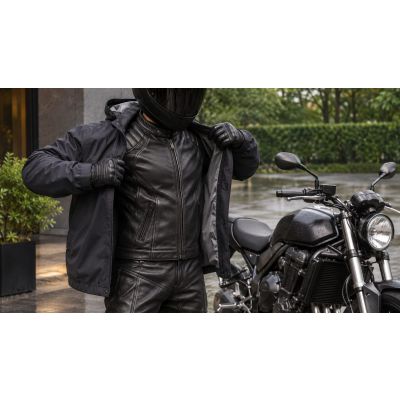
Short answer: A separate waterproof over-suit is the practical answer to rain in leathers. Size it larger than your normal size so it goes over armor, a hump and boots, and plan for visibility and careful drying afterward. Leather alone soaks through, gets heavy and cools you down.
Many riders search for a "motorcycle rain suit" without saying they also wear leathers. That is a different question from the usual one, because leathers are bulky, have armor and may have a hump. This guide covers what works over them, and what does not.
Why leathers alone do not cope with rain
Leather is a natural material that absorbs water. A wet jacket gets heavier, loses its shape and can feel cold against the body. Wet leather also dries slowly, and drying it the wrong way can harden or shrink it. For more detail, see our posts on whether a leather jacket is effective in the rain and what to do when leather gets wet.
Wet roads are also a separate issue from wet clothes. Grip is lower, and braking distances grow. Rider-training organizations give guidance on that, and it is worth reading before your next wet ride.
Rain gear types
| Type | Pros | Cons |
|---|---|---|
| One-piece rain suit | No gap between top and bottom | Harder to put on over boots and a hump |
| Two-piece suit | Flexible, easier to put on, can use one half | Gap at the waist if it rides up |
| Jacket plus over-pants | Good if you wear a leather jacket and jeans or pants | Check the overlap at the waist |
| Packable cover | Light, folds small | Thin, may tear, less durable |
For race suits, a two-piece or a roomy one-piece over-suit with a long zipper is usually the easiest to fit.
Sizing over leathers
This is where most riders go wrong. A rain suit that fits you in a T-shirt does not fit over leathers. The armor, the hump and the boots all add bulk. A common rule is to size up, but check the maker's fit guide because brands differ.
Use this fit check with the leathers on:
- Put on your leathers, boots and gloves.
- Pull the over-suit on. It should close fully without straining.
- Sit in the riding position. The jacket cuff should not ride up past your glove.
- Check that the hump does not pull the back tight.
- Check that the leg opening goes over your boots, and that the cuff closes.
Features that matter
- Waterproof zippers or storm flaps: water comes in at zippers first.
- Taped seams: stitched seams let water through.
- High-visibility color or reflective panels: rain and spray reduce how well drivers see you.
- Boot straps and adjustable cuffs: stop water running into boots.
- Ventilation: a fully sealed suit can get hot. Look for vents or a breathable fabric.
Riding technique in the rain
Keep this simple. Ride smoother, brake earlier and more gently, give more space to the vehicle ahead and avoid painted lines and metal covers. Rider-training organizations publish guidance on wet riding, and a rider course will teach more than a blog can. If conditions are bad, consider not riding.
After the ride
Take the rain gear off first, and hang it to dry. Then deal with the leathers.
- Blot standing water with a towel.
- Hang on a wide hanger or lay flat, in a room at normal temperature.
- Do not use a radiator, a hairdryer or direct sun. Heat dries leather out and can crack it.
- Once dry, check the care label and consider a leather conditioner suitable for the finish. Test on a hidden spot first.
Our guide to drying a wet leather jacket without damaging it gives step-by-step detail.
Putting rain gear on over leathers: a step-by-step
Putting on an over-suit with leathers already on is awkward. Doing it in the right order saves time in the rain.
- Put on your leathers first, with boots and gloves ready beside you.
- Step into the over-pants or the legs of the over-suit before you put on boots, if the leg opening is narrow. If it is wide enough to go over boots, put the boots on first and use the boot straps.
- Pull the jacket or top over the leather jacket or suit top. Fasten the front closure and the storm flap.
- Seal the cuffs over your gloves, so water does not run up the sleeve. The cuff should go over the glove, not inside it, on most rain gear.
- Check that the hem of the jacket overlaps the pants at the waist, with the jacket on the outside, so water runs down and off.
- Check your helmet and the neck seal last.
Practice this once at home so you are not doing it for the first time on the side of the road.
What does not work
- Cheap plastic ponchos: they flap at speed, trap water and can touch the hot parts of the bike.
- Spray-on water repellent for the whole jacket: some products can change the look or feel of leather. Check the care label first, and test a hidden spot.
- Kitchen bags and tape: they leak, and they do not help in a real downpour.
- Keeping going in soaking leathers: a wet rider gets cold, tires faster and loses focus. Stop and put the rain gear on early, not after you are soaked.
Planning ahead
Pack the rain gear before you need it. Keep a spare pair of gloves in a waterproof bag. Check the forecast, and if heavy rain is expected, think about leaving the leathers at home and using gear designed for wet weather. A properly fitted custom motorcycle jacket is easier to put a rain layer over, because the sleeve and shoulder fit is right to begin with. For suits, see our leather race suits, and for legs, custom motorcycle pants.
Visibility and your own safety in the wet
Rain cuts how well you see and how well others see you. Visors fog, spray hides your bike, and drivers look for shapes against a gray background. A few habits help.
- Choose a rain suit with reflective panels or a bright color, even if it looks less sleek over your leathers.
- Use an anti-fog insert or treatment on the visor, and keep the vent slightly open.
- Keep your lights on and clean. Wipe the lens when you stop.
- Leave more room to the vehicle in front. Spray from trucks reduces visibility a lot.
Whether to ride at all is a judgment call. Heavy rain, standing water and poor visibility are all good reasons to wait. No gear removes those risks.
Common mistakes with rain gear over leathers
- Buying your normal size: the over-suit will not close over armor and a hump.
- Forgetting the hands and feet: water follows the sleeves into gloves and the legs into boots. Use waterproof gloves or covers and boot covers.
- Packing it at the bottom of a bag: keep it where you can reach it without unpacking everything.
- Drying leathers on a heater: this stiffens and can crack them.
- Leaving wet gear in a bag: it gets musty. Hang it up the same day.
Gear care between wet rides
Rotate your gear if you can, so each piece has time to dry fully. Keep leathers away from heaters and store them in a ventilated space. Wipe off road grime when dry.
Plan your wet-weather kit around a properly fitted custom motorcycle jacket.
FAQs
Can you wear a rain suit over leathers?
Yes, if it is large enough. Size up so it fits over armor, a hump and boots.
What size rain suit do I need over a leather jacket?
Often one to two sizes up from your normal size. Check the maker's guide and try it with the jacket on.
Do leather motorcycle suits keep you dry?
Generally no. Leather absorbs water and will soak through in sustained rain unless it is treated or covered.
How do I dry leather riding gear after rain?
Let it dry slowly at room temperature, away from heat. Blot first, then condition when dry if the care label allows.
Is a leather jacket good in the rain?
It can handle a light shower, but not a long ride in heavy rain. A waterproof layer on top is a better plan. Our leather gear is not waterproof and we do not offer a rain liner, so plan on a rain layer over it.
What is better: rain suit or waterproof jacket?
A rain suit covers the whole body. A waterproof jacket protects only the top. If you wear leathers, an over-suit is usually the simpler way to stay dry.