 USA
 Canada
 Brazil
 Germany
 France
 Italy
 Switzerland
 Sweden
 Spain
 Norway
 Russia
 South Africa
 Japan
 New Zealand
 Australia


"Sustainable leather" is used loosely, so it helps to know what the term can and cannot mean. Leather is made mostly from hides of animals raised for food, tanning has a real environmental cost, and the strongest sustainability argument is usually how long a garment is worn. This guide separates those points, and shows what to look for when buying leather clothing. Related clothing is listed in the category.
Key Takeaways
- According to the Leather Working Group, most leather comes from hides of animals raised for food, so reusing hides is only part of the sustainability question.
- Most leather is chrome-tanned; vegetable tanning uses plant tannins and gives a different look and feel.
- The Leather Working Group audits tanneries on environmental performance, but its audits do not measure farm-level impact.
- Longevity is the practical lever: a garment worn for years replaces several short-lived ones.
What Sustainable Leather Means
There is no single legal definition of sustainable leather. In practice the term points to four areas: where the hides come from, how they are tanned, how the garment is made and how long it stays in use. A claim is only as strong as the evidence behind each of them, so it is fair to ask a seller which of the four it can document.
Where the Hides Come From
Leather is a by-product of the food industry: the Leather Working Group states that hides from animals raised for food account for 99% of the world's leather, and that without leather production they would otherwise end up as waste. Using hides that would otherwise be discarded is a genuine benefit, but it does not make leather impact-free.
Tanning and Certification
Tanning turns raw hide into stable leather. Chrome tanning is the dominant method worldwide, and it can pollute water and soil when waste is not managed. Vegetable tanning uses tannins that occur naturally in the bark and leaves of plants and is a traditional alternative that gives a different look and feel.
The Leather Working Group is a not-for-profit organisation that audits leather manufacturers and other supply-chain actors. Its standards look at environmental impact, chemical management, animal welfare, social responsibility and traceability. A tannery audit is a useful signal, although it describes the tannery and not the farm where the animal was raised, so it should be read as one piece of evidence rather than a complete answer.
Durability, Repair and Made-to-Order
For clothing, longevity is the factor a buyer controls. Leather that is cared for properly can stay in use for a long time, which spreads its footprint across many years of wear. Sustainability in leather extends past the purchase and into how the product is used and maintained.
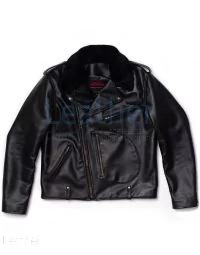
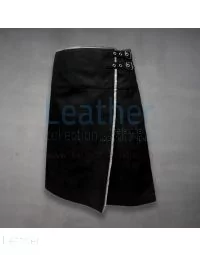
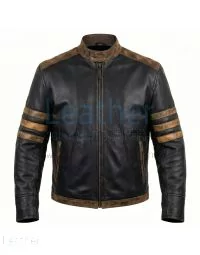
Made-to-order production is one way to avoid unsold stock, because a garment is cut after an order is placed. Leather Collection makes its garments to order and by hand, including options such as the and the . For a long-lived item, look for garments that can be resized or repaired. One more jacket to look at is the .
Questions to Ask Before Buying Leather Clothing
- Which leather is used, and can the seller say how the hide was tanned?
- Does the tannery hold an independent audit such as the Leather Working Group?
- Is the garment cut to order or produced in large runs?
- Can it be altered or repaired when the fit changes?
- Does the cut suit the way it will be worn, so it stays in use?
Caring for Leather So It Lasts
Follow the care label or the maker's instructions; the right products depend on the finish and construction of each item. Women's styles are listed under .
Frequently Asked Questions
Is leather a by-product of the meat industry?
Largely yes: according to the Leather Working Group, hides from animals raised for food make up most of the world's leather. Using hides that would otherwise be wasted is a benefit, but it does not remove the environmental effects of farming and tanning.
What is the Leather Working Group?
The Leather Working Group is a global not-for-profit organisation that audits leather manufacturers and other supply-chain actors. Its standards cover environmental impact, chemical management, animal welfare, social responsibility and traceability. An audit describes the tannery, so it does not by itself settle farm-level impact or the sustainability of a specific garment.
Is vegetable-tanned leather more sustainable than chrome-tanned leather?
Vegetable tanning uses tree-derived tannins and is a traditional alternative to chrome tanning, which can pollute water and soil if its waste is not managed. Vegetable-tanned leather has a different look and feel, and it suits some garments better than others, so the choice depends on the product as well as the process.
Does made-to-order production reduce waste?
Cutting a garment after it is ordered avoids producing stock that may go unsold, which is the main waste argument for made-to-order clothing. It does not remove all offcuts or the footprint of the leather itself, so it is most useful alongside a garment that stays in use for years.
Written by the Leather Collection Editorial Team.