 USA
USA  Canada
  Brazil
  Germany
  France
  Italy
Italy  Switzerland
  Sweden
  Spain
Spain  Norway
  Russia
  South Africa
  Japan
Japan  New Zealand
  Australia
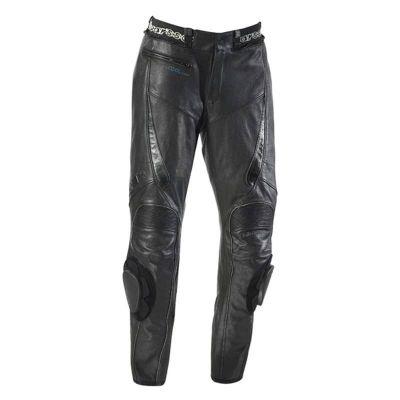
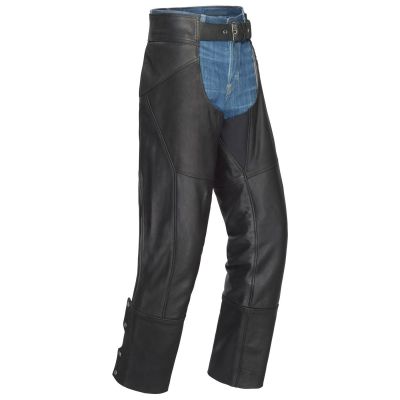
are a core piece of riding gear: leather resists abrasion in a slide, and the cut decides whether protectors stay where they are needed. This guide explains what to look for in fit, construction, protection labels and care when choosing motorcycle leather trousers.
Key Takeaways
- Leather trousers are judged on abrasion resistance, seam strength and how well the knee and hip protectors stay in position.
- The garment standard is EN 17092 (classes AAA to C); knee and hip armour is tested separately under EN 1621-1.
- A snug fit matters because loose leather bunches and lets protectors move.
- Racing, touring and street cuts suit different riding; match the cut to how and where the trousers are worn.
- Care follows the garment's label or the maker's instructions; the right product depends on the finish and construction.
Why Leather Trousers Matter for Riders
In a fall, the legs slide along the road surface before anything else. Leather is a traditional choice for that reason: a thick hide is a durable surface for sliding, and well-made seams keep the panels together while the trousers slide. Cowhide is a common material; kangaroo leather is also used in some riding gear.
Protection does not come from leather alone. Knees and hips are the joints most exposed in a slide, so riding trousers usually include pockets for removable armour. Leather trousers without armour pockets suit a different purpose than trousers built for fast or long-distance riding.
What the Standards Cover
Motorcycle protective clothing sold in Europe is covered by EN 17092. According to SATRA's overview of the standard, written while it was in draft, and its page on the published EN 17092:2020, the standard defines five classes, AAA, AA, A, B and C. Class AAA gives the highest level of protection from impact and abrasion, class AA is described as versatile across riding activities, and class A has minimal ergonomic penalties for warm conditions. The standard identifies three risk zones on a garment and tests abrasion with a Darmstadt machine, where a hole of 5 mm or more counts as a failure. Seam strength and tear strength are tested as well.
Armour is covered separately. As Wikipedia's overview of motorcycle armour notes, EN 1621-1 applies to limb protectors such as knee and hip armour: Level 1 requires a mean transmitted force below 35 kN with no single value over 50 kN, and Level 2 requires a mean below 20 kN. The class on the garment label and the level on the armour describe different things, so both should be checked. A rating also applies only to a product that is marked with it.
Choosing the Right Fit
Leather trousers should feel snug but not restrictive. Slim or tailored cuts allow free movement in the riding position, while excess leather can bunch at the knee and let the armour move away from the joint. The aim is for the knee protectors to stay centered on the kneecap when seated on the bike.
Adjustable waist straps, zippered cuffs and stretch panels help to fine-tune the fit. Test the trousers in a riding crouch, not just standing: the seat, thigh and back-of-knee areas should not pull or pinch.
Styles of Motorcycle Leather Trousers
come in several styles for different riding and different seasons:
- Racing trousers: a close, aerodynamic cut for track use, usually with knee sliders and armour pockets.
- Touring trousers: more room and often stretch panels for long days in the saddle.
- Street trousers: a casual look with fewer visible protective details; a style such as suits everyday wear, and the armour pockets or armour included should be checked before riding.
Riders looking for a men's cut can browse to compare fits and styles.
Styling Leather Trousers
For riding, matching the trousers with a leather jacket, boots and gloves keeps the protective layers consistent. Off the bike, black leather trousers pair with a plain T-shirt or a jacket for a streetwear look. Balancing textures, for example leather with cotton or knit, keeps the outfit from looking heavy.
Care and Maintenance
Follow the garment's care label or the maker's instructions; the right cleaner or conditioner depends on the finish and construction of the leather. Dry the trousers away from direct heat, store them in a cool, dry place out of direct sunlight, and check seams and armour pockets regularly. Armour that has taken a hard impact should be inspected or replaced following the manufacturer's guidance.
Frequently Asked Questions
What is the difference between EN 17092 classes AAA and AA?
Class AAA offers the highest level of protection from impact and abrasion under EN 17092, while class AA is positioned as a versatile level for a wider range of riding. Both are tested on the finished garment, including abrasion, seam strength and tear strength. The class on the label should be checked for the specific trousers rather than assumed from the material.
Do leather riding trousers include knee and hip armour?
Many do, but not all. Riding trousers often have pockets for removable knee and hip protectors, which are tested under EN 1621-1 as Level 1 or Level 2. Fashion-oriented leather trousers may have no armour pockets at all. The product description and labels show what is included and what has been tested.
How should motorcycle leather trousers fit?
They should be snug without restricting movement. In the riding position the trousers should not pull behind the knee, and the knee protectors should stay centered on the joint. Loose leather can bunch and shift the armour, so adjusting straps, stretch panels and made-to-measure options are worth considering.
Written by the Leather Collection Editorial Team.