 USA
USA  Canada
  Brazil
  Germany
  France
  Italy
Italy  Switzerland
  Sweden
  Spain
Spain  Norway
  Russia
  South Africa
  Japan
Japan  New Zealand
  Australia
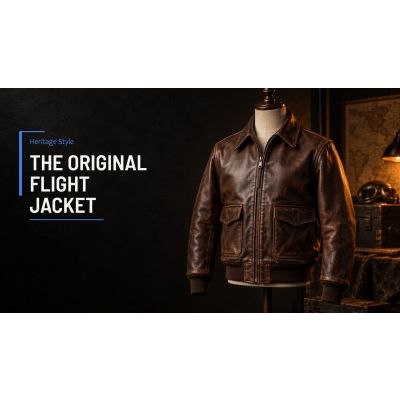
The original A-2 flight jacket is the leather jacket the U.S. Army Air Corps adopted on May 9, 1931. It was a waist-length, seal-brown horsehide jacket with a zip front, a snap-down shirt collar and knitted wool cuffs and waistband. Modern copies keep that silhouette, but they differ in leather, linings, labels and detail, so knowing the 1930s and 1940s original is a sound way to judge any jacket sold under the A-2 name.
Key Takeaways
- The A-2 was approved by the Army Air Corps in 1931 and replaced the button-front A-1 with a zipper.
- Early jackets used horsehide; cowhide and goatskin were approved later, so leather type alone does not mark a copy.
- Wartime contractors made jackets to different levels of finish, so "original" covers a wide range.
- Ask for the leather type, lining, collar and cuff details of any A-2 style jacket, and compare them with period examples.
Where the A-2 came from
Air Corps specifications for a new summer flying jacket were issued in 1930, a first wear test followed in September 1930, and production was approved in May 1931 (Air and Space Forces Magazine). Its predecessor, the A-1, closed with buttons. The A-2 swapped them for a brass zipper, kept hidden snaps and added a shirt-style leather collar with stitched-down shoulder straps.
The specification was written for horsehide, chrome tanned. Cowhide was approved on July 17, 1940, and goatskin on March 10, 1941 (Wikipedia). The A-2 specification was cancelled on February 26, 1951, although many jackets stayed in use long after that.
What an original A-2 looks like
The Smithsonian's National Air and Space Museum holds the jacket General Chuck Yeager wore on his October 14, 1947 flight in the Bell X-1. Its record describes seal-brown horsehide, a brass zipper, a stand-and-fall collar with snaps, brown wool knit cuffs and waistband and a brown rayon lining with a maker's tag inside the collar (Smithsonian National Air and Space Museum). That description is a useful checklist.
- Silhouette: waist-length, with a knitted waistband.
- Collar: leather, shirt style, closed with snaps rather than a knit or fur collar.
- Cuffs and hem: knitted wool, not leather bands.
- Front: a zipper with a concealed snap placket, not a button front.
How original A-2 jackets differ from modern copies
Differences usually sit in a handful of places, shown in the table below. None of them make a modern jacket a fake; they explain what a buyer is getting.
| Detail | Period original | Modern copy |
|---|---|---|
| Leather | Horsehide first; cowhide and goatskin approved in 1940 and 1941 | Varies by maker; the seller should state which leather is used |
| Lining | Silk, rayon or cotton are recorded in different sources | Varies; the maker should state it |
| Labels | Contractor tag, specification and size markings | Brand tag; reproduction labels may copy the old layout |
| Wear | Aged by decades of use | New, or deliberately distressed |
| Sizing | Military sizes from 32 to 54, cut for the period | Modern size charts and patterns |
Wartime jackets were also not identical. Producers such as Rough Wear and J.A. Dubow worked to the same specification but with different workmanship across contracts. The word "original" therefore describes a period and a pattern, not one single standard of finish.
Painted backs and later history
Many wartime crews decorated their jackets with unit insignia, painted artwork and slogans. In November 1944 the War Department banned unauthorized artwork on flying jackets. The Air Force reintroduced the A-2 in 1987, around its 40th anniversary, with first deliveries in May 1988. The 1931 shape has kept its place as a civilian style since.
Buying an A-2 style jacket today
A buyer looking for an original A-2 jacket for sale will meet three different things: genuine period pieces, military-issue reissues and reproductions. Period pieces are collector items, so condition, labels and provenance matter more than the shape. Reproductions are judged on leather, pattern and finish. For everyday use, a modern jacket made in the same spirit is usually the more practical choice.
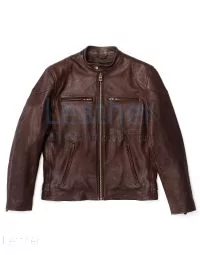
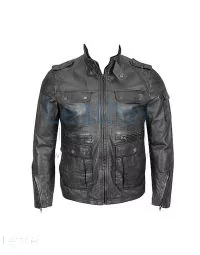
The A-2 sits next to other leather styles with a short, fitted cut. A shortlist from the range can be compared against the A-2 checklist above, while the is another close-cut brown style in the same colour family, and the is a separate style; check each product page for collar, pockets and leather.
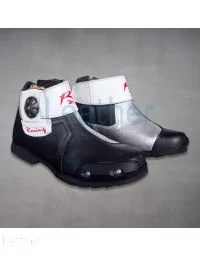
Jackets with fur trim or lining are grouped under , which suit colder weather than the summer flying jacket the A-2 was specified as. Riders who like period styling sometimes pair a jacket with . Check each product page for leather type, lining and fit, and ask the seller for any detail that is not listed.
Frequently Asked Questions
When was the original A-2 flight jacket introduced?
The U.S. Army Air Corps approved the A-2 on May 9, 1931. Specifications had been issued in 1930 and a wear test took place that September. It replaced the button-front A-1 with a zipper front and a snap-down leather collar, and the design stayed in service for many years.
Was the original A-2 always made of horsehide?
No. The first specification called for chrome-tanned horsehide. Cowhide was approved on July 17, 1940, and goatskin on March 10, 1941. Jackets from different contractors can therefore be made of different leathers and still be period correct, so the leather alone does not separate an original from a copy.
How can a buyer tell a modern copy from a period jacket?
Check the label, lining material, cuff and collar construction, zipper and size markings against documented examples such as museum records. Reproduction labels can imitate old ones, so provenance and a seller who can explain each detail matter more than appearance alone.
Did the Air Force bring the A-2 back?
Yes. The Air Force reintroduced the A-2 in 1987, around its 40th anniversary, and the first goatskin jackets under the initial contract were delivered in May 1988. This reissue is separate from the 1930s and 1940s originals and from commercial reproductions, which follow their own patterns.
Written by the Leather Collection Editorial Team.