 USA
USA  Canada
  Brazil
  Germany
  France
  Italy
Italy  Switzerland
  Sweden
  Spain
Spain  Norway
  Russia
  South Africa
  Japan
Japan  New Zealand
  Australia
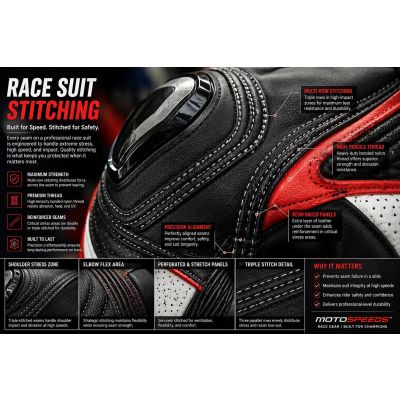
When you're choosing a motorcycle race suit, most riders focus on fit, color, and armor placement. But stitching is one of the most critical safety features you won't see until you examine the gear closely. The seams in your race suit can mean the difference between gear that holds together during a slide and gear that fails when you need it most. Understanding motorcycle race suit stitching helps you make a smarter buying decision and choose protective gear built to perform when it matters.
Quick Answer
Stitching in motorcycle race suits is engineered for abrasion and impact resistance. Quality seams use reinforced thread, multiple rows of stitching, and strategic placement in high-stress zones. Proper stitching keeps armor in place, prevents leather from tearing, and ensures the suit performs as designed during a crash. Check seam quality, count the rows, and verify the suit meets EN 17092 standards before buying.
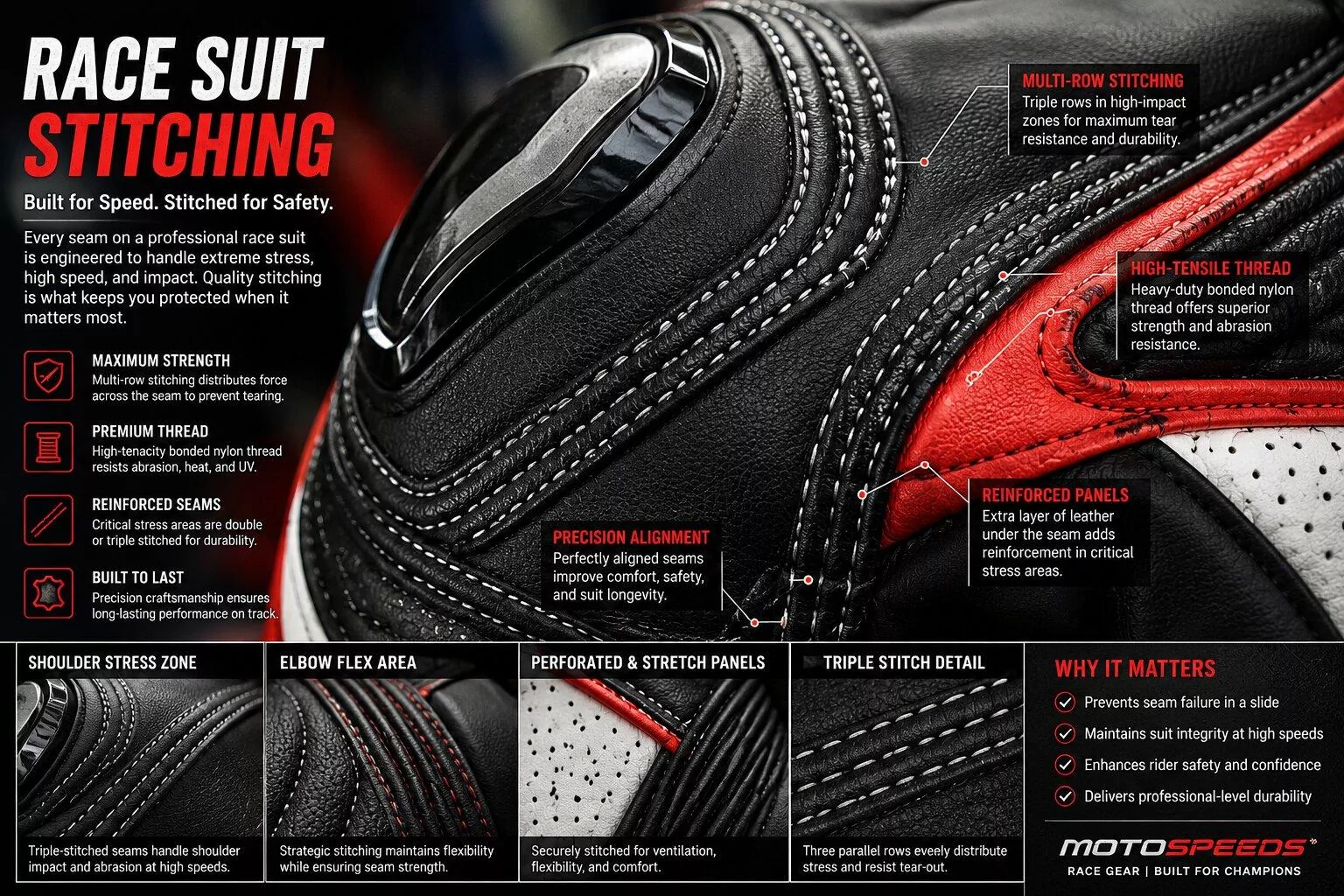
Table of Contents
- What Stitching in Race Suits Really Means for Rider Safety
- Why Seam Quality Matters on the Track and the Road
- How Reinforced Stitching Protects During a Crash
- What Riders Should Check Before Buying a Race Suit
- Common Mistakes Riders Make About Stitching and Seams
- How Fit, Comfort, and Stitching Work Together
- Final Buying Advice for Race Suits
What Stitching in Race Suits Really Means for Rider Safety
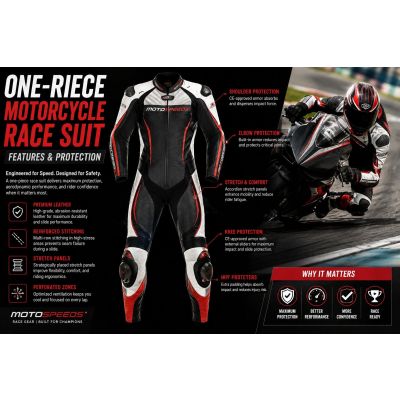
Stitching is the thread holding your leather race suit together. It sounds simple, but the engineering behind it is not. In a crash or high-speed slide, your suit experiences extreme forces. The leather itself must resist abrasion, but the seams must stay intact so the suit doesn't tear open and expose you to further injury. Stitching also keeps armor panels locked in place so they stay over your joints and vital areas where you need protection most.
Race suit stitching is tested under EN 17092, the European standard for motorcycle protective clothing. This standard measures seam strength, tear resistance, and abrasion performance. When a suit earns an EN 17092 class rating—such as AA or A—the stitching has been tested to ensure it meets minimum strength requirements. The class indicates how well the seams and leather work together to resist tearing and abrasion, not impact force itself. Impact protection comes from the armor, which is tested separately under EN 1621.
Riders often confuse stitching quality with armor protection. They are separate concerns. Strong stitching keeps the suit together and holds armor in place. The armor itself—typically made from foam or gel—is designed to absorb impact energy. Both matter. A suit with perfect armor but weak seams will fail. A suit with excellent seams but no armor offers limited protection. Leather Collection race suits combine reinforced stitching with strategically placed CE armor to work as a complete protective system.
Why Seam Quality Matters on the Track and the Road
On the track, a race suit experiences extreme conditions. You're leaning hard into corners, accelerating, braking, and moving constantly. If a seam begins to fail, it can unravel during a crash when you need the suit to hold together most. On the street, seams face different stress—longer rides, heat, repeated flexing, and the unpredictability of traffic accidents. A seam that holds during a controlled track day might fail during a real-world street crash if it wasn't built strong enough.
Quality stitching also keeps your armor panels from shifting. During a slide or impact, armor needs to stay centered over your elbows, knees, shoulders, and back. If seams are weak or loose, armor can slip out of position, leaving you exposed. This is why Leather Collection pays careful attention to how armor is stitched into the suit. The seams around armor panels are reinforced with extra rows of thread to prevent movement during impact.
Riders who want better protection for city and road use can explore our
to compare suits built with reinforced seams and strategic armor placement.Heat and humidity also stress seams. During summer riding or long track sessions, sweat and heat can weaken thread over time if the suit isn't made from quality materials. Thread that degrades loses its holding power. This is why premium race suits use synthetic or polyester thread rated for high temperatures and UV exposure, not standard cotton thread that breaks down faster.
How Reinforced Stitching Protects During a Crash
When a rider crashes, the suit hits the ground first. Friction and abrasion happen instantly. The leather begins to wear, and the seams experience enormous tension as the leather tries to tear. Reinforced stitching resists this tearing. Multiple rows of thread—often three, four, or more in critical zones—distribute the stress across a wider area so no single thread bears all the load.
Think of it like this: a single thread might break under high tension. Two threads share the load better. Four threads share it even better. That's why race suits have multiple rows of stitching in high-impact zones like shoulders, elbows, knees, and hips. These are the areas that hit the ground first during a slide. The extra thread rows keep the leather from tearing and keep the suit intact long enough to do its job.
Stitching also prevents delamination, where layers of leather or reinforced panels separate from each other. If stitching fails, leather layers can peel apart, which reduces abrasion resistance and can cause armor to shift. Quality stitching keeps all layers bonded together as a unified protective barrier.
Riders should understand that protective gear reduces injury risk but does not prevent all crash injuries. Even with reinforced stitching, a high-speed crash can cause injury. Stitching helps keep the suit together and armor in place, which helps reduce the severity of abrasion and impact injuries—but it is not a guarantee against injury. Proper fit, correct armor placement, and rider behavior all matter equally.
What Riders Should Check Before Buying a Race Suit
When you're shopping for a motorcycle race suit, inspect the stitching in person if possible. Look for these details:
Seam Rows: Count the number of stitching rows in high-stress zones like shoulders, elbows, knees, and the center back. More rows usually indicate stronger seams. Race suits typically have two to four rows in these areas. Budget suits might have only one or two rows; premium suits often have three or four.
Seam Placement: Quality race suits stitch seams in strategic locations—along edges, around armor panels, and in areas that experience the most abrasion. Seams should be tight and even, with no loose thread or gaps. Uneven stitching is a sign of lower quality construction.
Thread Quality: Look at the thread itself. It should be thick, even, and consistent. Thin or frayed thread indicates poor quality. Premium race suits use industrial-grade polyester or synthetic thread that resists heat and UV damage.
Armor Stitching: Examine how armor panels are stitched into the suit. The stitching around armor should be extra reinforced to prevent the armor from shifting during impact. If armor stitching looks weak or loose, the armor may move during a crash, which reduces protection.
EN 17092 Rating: Always check the product label or documentation for the EN 17092 rating. This indicates that the suit—including its stitching—has been tested for abrasion and tear resistance. An AA class indicates tested abrasion resistance under EN 17092. Check the product details or manufacturer documentation for the exact rating and what it covers.
Fit and Movement: Poor fit can stress seams. If a suit is too tight, seams experience constant tension during riding. If it's too loose, the suit can shift, causing seams to flex and fatigue. Proper fit reduces stress on seams and keeps armor in the right position. Consider custom sizing if standard sizes don't fit your body shape.
Common Mistakes Riders Make About Stitching and Seams
Mistake 1: Assuming visible stitching is always good. Visible stitching looks professional, but decorative stitching is different from structural stitching. Some race suits use decorative seams for appearance while hiding actual protective seams underneath. Ask the manufacturer where the protective seams are located and how many rows they have.
Mistake 2: Ignoring seams during the fitting process. A suit might fit well around the chest and arms but have seams that pull or bunch in certain positions. When you move on the bike—leaning, braking, accelerating—seams experience different stresses. Try on a suit and move around. Sit on a bike if possible. Watch for seams that pucker or pull. These will stress faster and may fail sooner.
Mistake 3: Believing one row of stitching is enough. Some budget race suits use single-row stitching to save money. A single row can fail under high stress. Multiple rows distribute the load and provide backup protection if one thread breaks. For track riding or high-speed road riding, multi-row stitching is worth the investment.
Mistake 4: Not checking armor attachment stitching. Riders often focus on the leather seams but ignore how armor is attached. If armor stitching is weak, the armor can shift during a crash, leaving you unprotected in critical areas. Inspect armor stitching with the same care you give to leather seams.
Mistake 5: Assuming all seams are created equal. Some manufacturers use cheap thread or low-quality stitching techniques to cut costs. Premium race suits invest in industrial-grade stitching equipment and quality thread. The difference shows in durability and how the seams perform after a crash.
How Fit, Comfort, and Stitching Work Together
Stitching quality only works if the suit fits well. A poorly fitted suit stresses seams in unexpected ways. Seams that should be relaxed become stretched and fatigued. This accelerates seam failure, even if the stitching is otherwise high quality.
Proper fit means the suit moves with your body without excess fabric bunching or pulling. On the bike, you should be able to lean, grip the tank with your knees, and move your arms freely without seams pulling or twisting. If seams twist during riding, they experience torsional stress that weakens them over time.
Comfort also matters for protection. If a suit is uncomfortable, you'll be tempted to remove it or wear it improperly. A suit that's too hot might be unzipped on warm rides, reducing protection. A suit that's too restrictive might be worn loose, allowing armor to shift. The best race suit is one you'll actually wear properly every time. This means the stitching and fit have to work together to keep you protected without sacrificing comfort.
Custom sizing can improve both fit and seam durability. Leather Collection offers custom motorcycle racing suits that are tailored to your body measurements. A custom suit fits precisely, which reduces stress on seams and keeps armor in the correct position. This investment in fit often results in better protection and longer gear lifespan.
Final Buying Advice for Race Suits
When you're ready to buy a motorcycle race suit, prioritize stitching quality alongside armor and material. Here's what to do:
Compare seam construction. Look at multiple suits side by side. Count the stitching rows in high-stress areas. Read product descriptions carefully to understand how each suit is constructed. Premium brands publish detailed seam maps showing where reinforced stitching is located.
Check certifications and standards. Verify the EN 17092 rating. Understand what the rating means for abrasion and tear resistance. Check the product label or manufacturer documentation for exact armor ratings under EN 1621. Do not assume a rating means the suit is suitable for every type of riding—different suits are designed for different purposes.
Inspect the suit in person. If you're buying online, request detailed photos of seams in critical areas. Ask the manufacturer about thread quality, stitching technique, and how armor is attached. Good brands are happy to provide this information because they're proud of their construction.
Consider custom sizing. Off-the-rack suits work for many riders, but if you have an unusual body shape or size, custom sizing ensures a perfect fit. Better fit reduces seam stress and keeps armor positioned correctly.
For riders comparing real protective gear with reinforced construction and strategic armor placement, the
demonstrates how quality stitching, armor placement, and fit work together to support safer riding decisions.Inspect gear after a crash. Even if a suit looks intact after a crash, seams may be damaged internally. Stitching that held during the slide might be weakened and could fail during a future crash. After any crash, have the suit inspected by the manufacturer or a professional gear specialist. Damaged seams may need repair or the gear may need replacement.
FAQs About Motorcycle Race Suit Stitching
How many rows of stitching does a good motorcycle race suit have?
Quality race suits typically have two to four rows of stitching in high-stress zones like shoulders, elbows, knees, and the back. More rows provide better load distribution and backup protection if one thread breaks. Budget suits might have one or two rows; premium race suits often have three or four. Check the product details to see exactly where reinforced stitching is located and how many rows are used in each zone.
What does EN 17092 mean for stitching quality?
EN 17092 is the European standard that tests motorcycle protective clothing for abrasion resistance, tear strength, and seam strength. A suit rated AA or A under EN 17092 has passed these tests. The rating indicates that the stitching and leather have been tested to meet minimum strength requirements. However, the EN 17092 rating measures abrasion and tear resistance, not impact protection. Impact protection comes from armor tested separately under EN 1621. Always check the product label or manufacturer documentation for the exact rating.
Can weak stitching cause armor to shift during a crash?
Yes. If armor is stitched weakly into the suit, it can move or slip during impact. Armor needs to stay centered over joints and vital areas to provide protection. Quality race suits use extra-reinforced stitching around armor panels to prevent shifting. When inspecting a suit, pay special attention to how armor is attached. The stitching around armor should be as strong as the stitching on the leather seams.
What type of thread is best for motorcycle race suits?
Industrial-grade polyester or synthetic thread is best for race suits. These materials resist heat, UV damage, and moisture better than cotton thread. Polyester thread is also stronger and more durable under the extreme stresses of a crash or long slide. Check the product details to see what thread the manufacturer uses. Premium brands often specify their thread type because it's a mark of quality construction.
Does stitching quality affect how long a race suit lasts?
Yes, significantly. Quality stitching resists wear from repeated flexing, heat, and humidity. Poor stitching can fail from normal wear even before a crash. If you ride regularly or use your suit for track days, strong stitching means your gear will last longer and perform better over time. This is why investing in a well-constructed suit with multi-row stitching often saves money in the long run.
Should I repair or replace a race suit after a crash?
Inspect the suit carefully after any crash. If stitching is torn, frayed, or visibly damaged, repair is often possible. However, internal seam damage may not be visible. Have the suit inspected by the manufacturer or a professional gear specialist. If seams are severely damaged or if the suit has experienced multiple crashes, replacement may be safer than repair. Damaged gear may not perform as designed in a future crash.
Can I tell if a race suit has good stitching just by looking at it?
You can get a good first impression by examining the seams closely. Look for even, tight stitching with no loose threads or gaps. Count the number of rows in high-stress areas. Check how armor is attached. However, thread quality and internal seam construction aren't always visible. Ask the manufacturer for detailed product information, seam maps, and specifications. Good brands provide this information because they're confident in their construction.
Conclusion
Stitching in motorcycle race suits is far more than a detail—it's a critical safety feature that keeps your gear together and your armor in place during a crash. Understanding how reinforced stitching works, what to look for when buying, and how fit affects seam durability helps you make smarter protective gear decisions. Quality motorcycle race suit stitching, combined with proper fit and certified armor, gives you a complete protective system designed to perform when you need it most.
The next time you're shopping for a race suit, spend time examining the seams. Count the rows in high-stress zones. Check how armor is attached. Ask the manufacturer about thread quality and construction methods. Read the EN 17092 rating. Take the time to find a suit that fits well and is built to last. These details matter more than you might think, and they directly affect how well your gear protects you on the road or track. Explore Leather Collection's range of custom and performance-engineered race suits to find gear built with the reinforced stitching and strategic armor placement you need for safer riding.