 USA
USA  Canada
  Brazil
  Germany
  France
  Italy
Italy  Switzerland
  Sweden
  Spain
Spain  Norway
  Russia
  South Africa
  Japan
Japan  New Zealand
  Australia
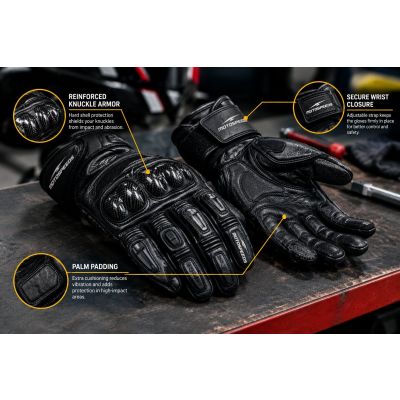
You're standing in front of three pairs of motorcycle racing gloves. One feels snug around the wrist. Another has armor that seems thick but also bulky. The third is a brand you've never heard of, but it's cheaper. You don't know which one will actually protect your hands in a crash, keep your grip steady at high speed, or stay comfortable during a full day of track riding. This confusion is normal. Most riders buy gloves based on price or looks, then discover too late that the fit is wrong, the armor doesn't cover the right spots, or the leather wears through faster than expected.
Choosing the right motorcycle racing gloves matters more than many riders realize. Your hands hit the ground first in most crashes. Poor glove choice leads to severe hand and wrist injuries that can end a riding season or cause lasting nerve damage. Beyond safety, the right gloves improve your confidence, reduce fatigue, and let you focus on your riding instead of uncomfortable fit or slipping grip. This guide walks you through exactly what to look for, what separates good racing gloves from mediocre ones, and how to avoid the most common and costly mistakes when buying motorcycle racing gloves.
Quick Buying Advice:
For track riding, prioritize gloves with reinforced palm and knuckle armor, wrist support, and a snug fit that allows full grip strength without restricting finger movement. Look for gloves with CE Level 2 armor (EN 1621-2 certified), at least 1.0 mm cowhide or thicker kangaroo leather, and multiple stitching layers at stress points. Fit is non-negotiable: your gloves should feel firm but not cutting off circulation, and your fingers should reach the fingertip padding with a slight bend at the knuckle. If you can pinch more than a quarter-inch of loose leather anywhere on the palm, the gloves are too large and will shift during a crash.
- What Should Riders Know Before Buying Motorcycle Racing Gloves?
- How to Choose Gloves Based on Your Riding Style
- What Safety Features Should Buyers Check?
- How Fit and Sizing Affect Comfort and Protection
- Which Materials and Construction Details Matter?
- Standard Size vs Custom Size: Which Should You Choose?
- Final Buying Advice from Leather Collection
What Should Riders Know Before Buying Motorcycle Racing Gloves?
Most riders think of gloves as a comfort accessory, but racing gloves are protective equipment. Your hands are your first point of contact in a crash, and unprotected skin on asphalt at 60 mph causes severe abrasion injury within milliseconds. Good racing gloves reduce hand injuries from road rash, protect bones and joints from impact, and stabilize your wrist during a slide. Poor gloves leave your palms exposed, offer no real impact protection, and can actually increase injury risk if loose padding shifts during a crash.
Racing gloves differ from street gloves in several ways. Racing gloves prioritize protection over ventilation because track days are shorter and happen in controlled environments. They use thicker leather, more armor, and reinforced stitching because crashes at track speeds are more violent than typical street riding. Street gloves balance protection with comfort for all-day wear and ventilation for hot weather. Commuter gloves prioritize comfort and dexterity for daily use. A racing glove that works perfectly on track will feel stiff and hot for a two-hour city commute. Conversely, a street glove will not protect your hands adequately if you crash at 100 mph on a closed circuit.
Understanding your actual riding needs is the first step. Track-day riders, club racers, and sportbike enthusiasts riding at the limit need racing-specific gloves. Weekend street riders doing spirited riding on empty roads can use quality street gloves. Commuters and casual riders need gloves that balance protection with wearability. Buying racing gloves for street riding often means paying for protection you do not need while sacrificing comfort you do. Buying street gloves for track riding is a safety gamble that usually ends badly.
How to Choose Gloves Based on Your Riding Style
Your riding style determines what features matter most in your gloves. A club racer preparing for a track day has different priorities than a sportbike rider doing occasional canyon runs, and both differ from a long-distance tourer. Matching your glove choice to your actual riding prevents overspending on features you do not need and underspending on protection you do.
If you spend time on a closed track or race circuit, you need racing gloves with aggressive armor and minimal ventilation. Track days are short bursts of intense riding in a controlled environment where crashes happen at known speeds. You want maximum protection, and comfort during a 20-minute session matters less than it does for a four-hour street ride. Look for gloves with reinforced palm sliders, knuckle protection, and a wrist closure that stays locked during a slide. Brands that make track-specific gear test their products at actual racing speeds, so their gloves are designed for the forces you will encounter.
If you ride a sportbike on the street but push hard on empty roads or occasional track days, you need gloves that blend racing protection with street usability. These gloves should have solid armor, reinforced palms, and wrist support, but they also need better ventilation and a slightly more comfortable fit for longer wear. You are riding at speeds where a crash is serious, but you are also wearing the gloves for hours, not minutes. This is where mid-range racing gloves work well: they offer genuine protection without the extreme stiffness of pure race gloves.
If you ride for distance or commute regularly, street gloves with good impact protection are the right choice. You need ventilation, comfort during extended wear, and enough dexterity to use your phone or adjust mirrors. Racing gloves will feel punishing after an hour in the saddle. A quality street glove with CE-certified armor, reinforced palms, and good wrist support gives you real protection without the sacrifice of comfort.
What Safety Features Should Buyers Check?
Racing glove safety comes down to three factors: armor type and placement, leather quality and thickness, and construction integrity. A glove can look protective but fail in a real crash if any of these elements is weak. Understanding what to check prevents buying gloves that look safe but perform poorly.
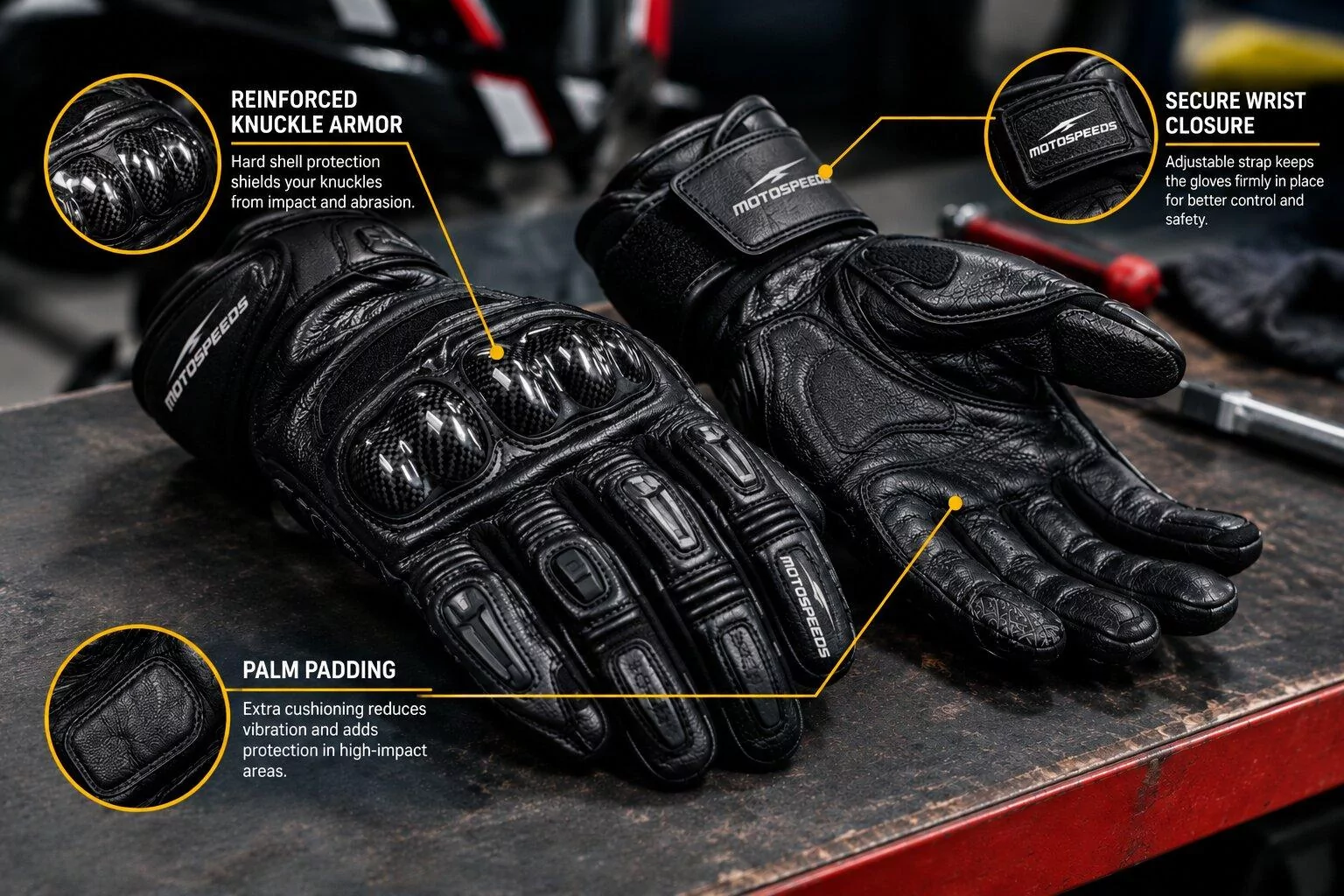
Armor is the most visible safety feature, but placement matters more than thickness. Your hands make contact with the ground in specific ways during a crash: your palms and the heel of your hand slide first, then your knuckles and fingers. Good racing gloves have reinforced armor on the palm heel, across the knuckles, and on the outer edge of the pinky side. Armor should be firm enough to stay in place during a slide but not so rigid that it restricts your grip. CE Level 2 armor (tested to EN 1621-2 standards) absorbs more impact energy than Level 1 under the same test conditions. For track riding, Level 2 is the minimum standard worth buying. Level 1 offers basic protection but is designed more for street use.
Wrist protection is often overlooked but critical. Your wrist is vulnerable during a crash because the impact forces your hand backward, and unprotected wrists suffer sprains, fractures, and ligament tears. Look for gloves with a reinforced wrist closure that wraps around the back of your hand and locks securely. The wrist support should limit backward bending without cutting off circulation. A good wrist closure stays tight during a slide and does not slip down during normal riding.
Leather quality and thickness determine how long your gloves protect you during a slide. Cowhide that is 1.0–1.3 mm thick provides good abrasion resistance and is widely available. Kangaroo leather is lighter and stronger per millimeter, so 0.8 mm kangaroo offers similar protection to 1.0 mm cowhide but with less bulk and weight. Cheaper gloves use thin leather (under 0.8 mm) or split leather, which tears easily and offers minimal abrasion protection. Reinforced leather on the palm and knuckles is standard in good racing gloves; cheap gloves use uniform thickness throughout, leaving your fingers exposed.
Stitching and seam reinforcement are easy to miss but essential. Double or triple stitching at stress points (wrist closure, palm edges, between fingers) keeps the glove together during a crash. Single stitching tears apart under impact. Look for gloves where seams are reinforced with bar tacks or multiple passes of thread. Gloves with flat-lock stitching on the inside reduce rubbing during wear but should still have reinforced seams on high-stress areas. Poor stitching means the glove fails during a crash, not after years of use.
Thumb and finger construction varies widely. Some racing gloves use a separate thumb piece that can shift during a crash, leaving your thumb exposed. Better gloves integrate the thumb into the main hand piece with reinforced stitching. Finger padding should cover the top of your knuckles and extend to the fingertips. If the padding ends before your fingertips, your fingers are exposed during a slide. Check that finger padding is not just thin foam but actual reinforced leather or dual-layer construction.
How Fit and Sizing Affect Comfort and Protection
Fit is where most riders make their biggest mistake. A glove can have perfect armor and premium leather, but if it does not fit correctly, the armor shifts during a crash and leaves gaps in protection. Additionally, poorly fitted gloves cause hand fatigue, restrict your grip strength, and make you uncomfortable enough to remove them or ride defensively. Fit affects both safety and performance.
Racing gloves should feel snug but not restrictive. Your palm should press firmly against the glove without excess material bunching or gaps. Make a fist: your knuckles should feel supported, and your fingers should reach the fingertip padding with a slight bend at each knuckle joint. If you have to fully straighten your fingers to reach the padding, the gloves are too large. If your fingers are cramped and cannot straighten at all, the gloves are too small. The correct fit allows full grip strength without creating pressure points or cutting off circulation.
Check the wrist fit carefully. The wrist closure should wrap around your wrist snugly and lock securely. You should not be able to slide the glove off your hand without undoing the closure. At the same time, you should be able to fit one finger between the wrist and your skin when the closure is fastened. If the closure cuts into your wrist or leaves marks after wearing, it is too tight. If there is more than a half-inch of slack, the gloves will shift during a crash.
Palm fit is critical for both protection and control. Lay your hand flat and look at the palm. There should be no wrinkles or bunching of leather. If you can pinch more than a quarter-inch of loose material anywhere on the palm, the gloves are too large. Loose material shifts during a crash, leaving your hand exposed. It also creates pressure points during riding, causing your hand to ache after 30 minutes. If the palm is so tight that you cannot move your hand flat without the leather pulling, the gloves are too small.
Finger fit determines whether you can maintain your grip and whether your fingertips are protected. Your fingers should fit snugly in the finger compartments with no extra space. Loose fingers mean the padding shifts away from your knuckles during a crash. Tight fingers restrict blood flow and cause cramping. The fingertip padding should cover your fingernail bed and extend slightly past your fingertips. If the padding ends before your fingertips, your fingertips are exposed during a slide.
Comfort during extended wear matters for track days that include multiple sessions. Put the gloves on and hold your riding position on your motorcycle for five minutes. Your hands should feel supported and protected, not fatigued or numb. If your fingers are tingling or your palm is aching after five minutes, the fit is wrong. If there are pressure points that create hot spots, the gloves will be painful after an hour of riding. A good fit feels firm and secure but does not create pain or numbness.
Many riders make the mistake of buying gloves one size too large because they feel snug at first. Gloves break in slightly, but they do not shrink significantly. A snug fit now will remain snug after ten track days. A loose fit now will remain loose and will shift during a crash. Buy for the fit you need for safety, not for the comfort of trying them on in a shop.
Which Materials and Construction Details Matter?
Leather quality and construction details separate gloves that protect you from gloves that fail in a crash. Understanding these details prevents buying gloves that look protective on paper but perform poorly in reality.
Cowhide is the most common racing glove material. Good cowhide is 1.0–1.3 mm thick, durable, and affordable. It offers solid abrasion resistance and is widely available from reputable brands. Cowhide is heavier than kangaroo leather and takes longer to break in, but it lasts longer and maintains its protective properties through multiple crashes. Budget cowhide under 0.8 mm is thin and offers minimal protection. Premium cowhide with reinforced palm sections is ideal for riders who prioritize durability and value.
Kangaroo leather is lighter and stronger per millimeter than cowhide. A 0.8 mm kangaroo glove offers similar protection to a 1.0 mm cowhide glove but with less weight and bulk. Kangaroo is more expensive and less widely available, but it is worth the cost if you want reduced hand fatigue during long track days. The trade-off is that kangaroo leather is thinner and can tear more easily during normal wear if not reinforced properly. Look for kangaroo gloves with reinforced palms and seams to ensure durability.
Synthetic leather and split leather are cheaper but offer minimal protection. Synthetic materials do not provide the same abrasion resistance as genuine leather, and split leather tears easily during a crash. These materials are found in budget gloves under $60. They feel protective at first but fail quickly in a real crash. Spending more on genuine leather is a safety investment, not a luxury choice.
Lining material affects comfort and durability. Mesh lining breathes better than solid fabric and is ideal for racing where ventilation is less critical but comfort during wear matters. Leather lining is more durable but hotter. Some gloves use removable liners, which is useful if you want to wash them or replace them if they wear out. Check whether the lining is glued or stitched: stitched linings last longer than glued ones.
Padding and armor backing matter for impact protection. Foam padding alone compresses and offers minimal impact protection. Dual-layer construction with firm foam backed by a stiffer material provides better protection. Some racing gloves use gel or specialized polymers that absorb impact better than standard foam. The best racing gloves combine multiple padding layers in high-impact areas (palms, knuckles) with thinner padding in lower-impact areas (sides, back of hand).
Zipper and closure quality affects durability. A good racing glove has a secure wrist closure that locks and does not slip. Velcro closures are common and work well if the hook-and-loop material is quality grade. Some racing gloves use buckles or drawstring closures, which are more secure but slower to fasten. The wrist closure should be reinforced and should not fray or lose grip after repeated use. Cheap gloves have weak closures that loosen during riding.
When is it worth paying more? Racing gloves range from $60 to $300 per pair. Budget gloves ($60–$100) offer basic protection and are suitable for occasional riders or those still learning their size. Mid-range gloves ($100–$180) offer solid armor, good leather, and reliable construction. They are ideal for most track-day riders and sportbike enthusiasts. Premium gloves ($180–$300) use premium leather, advanced armor, custom fit options, and superior construction. They are worth the cost if you ride frequently, want maximum protection, or have specific fit needs. Do not assume the most expensive gloves are best for you; the right choice depends on your riding frequency, body type, and budget.
Standard Size vs Custom Size: Which Should You Choose?
Most riders fit standard sizes well and do not need custom gloves. Reputable brands offer gloves in sizes XS through XXL, with proportions that fit typical hand sizes and shapes. Custom sizing is valuable when your hands fall outside typical proportions, when standard sizes create pressure points or fit gaps, or when you want a perfect match with a custom racing suit.
Standard sizing works if your hands are average width and length for your size. Try on gloves in your size and check the fit using the criteria in the Fit and Sizing section above. If the palm fits snugly, your fingers reach the padding with a slight bend, and the wrist closure is secure, standard gloves are the right choice. Standard gloves are faster to order, less expensive, and arrive in days instead of weeks.
Custom sizing is worth considering if standard gloves create consistent fit problems. If your hands are very narrow or very wide for your height, if your fingers are disproportionately long or short, or if standard gloves create pressure points on your palm or wrist, custom gloves can solve these issues. A custom glove is made to your specific hand measurements and can be adjusted for palm width, finger length, wrist circumference, and armor placement. The cost is typically 20–40% higher than standard gloves, and the lead time is 4–8 weeks instead of days.
Riders building a complete racing suit often choose custom gloves to match their custom suit. This ensures consistent fit across your gear and allows you to specify armor placement that matches your suit's armor. If you are already ordering a custom racing suit, adding custom gloves is a natural choice. If you are buying gloves alone, standard sizing is usually sufficient unless you have documented fit problems with multiple brands.
Final Buying Advice from Leather Collection
Buying the right motorcycle racing gloves comes down to three non-negotiable decisions: protection level, fit, and material quality. Make these decisions in order, and you will avoid the most common and costly mistakes.
First, choose your protection level based on your riding style. Track-day riders and club racers need CE Level 2 armor with reinforced palms and knuckles. Sportbike riders doing spirited street riding need solid CE-certified armor and good wrist support. Street riders and commuters need quality armor but can prioritize comfort and ventilation. Do not buy racing gloves for street riding or street gloves for track riding. The mismatch between gear and riding creates false confidence or unnecessary discomfort.
Second, prioritize fit above all else. Try gloves on and test them against the fit criteria outlined above. A snug, secure fit is non-negotiable for safety. If a glove does not fit right, do not buy it hoping it will break in or stretch. Leather breaks in slightly, but it does not reshape itself to fit your hand. A loose glove now will remain loose and will shift during a crash. A tight glove now will remain tight and will cause pain and fatigue. Fit is where most riders make their biggest mistake, and it is the easiest mistake to prevent by spending time on the fit test before buying.
Third, choose materials and construction quality based on your budget and riding frequency. If you ride track days monthly or more, invest in premium leather and reinforced construction. These gloves will protect you through multiple crashes and will last for years. If you ride occasionally, mid-range gloves with good leather and solid construction are sufficient. Do not buy the cheapest gloves available; the cost difference between a $60 glove and a $120 glove is small compared to the cost of a hand injury.
Riders who want better protection for track and road use can explore our
for gloves designed around safety, fit, and racing performance.Once you have narrowed your choices, order from a retailer with a good return policy. Fit is personal, and what fits one rider perfectly may not fit another. A 30-day return window lets you test the gloves at home, try them on your motorcycle, and make sure the fit is right before committing. If the fit is not perfect, return them and try a different size or brand. This is not a waste; it is the only way to get gloves that truly fit your hands.
For riders comparing real protective gear, the
shows how armor placement, reinforced construction, and fit work together to protect your hands during track riding.After you buy your gloves, take care of them. Clean them regularly with mild soap and water, dry them flat, and store them away from direct heat and sunlight. Leather lasts longer when it is clean and dry. Check your gloves before each ride for signs of wear: torn seams, loose armor, or degraded padding. Gloves with visible damage should be retired. Replace them before they fail in a crash.
Frequently Asked Questions
What is the difference between CE Level 1 and Level 2 armor in motorcycle gloves?
CE Level 2 armor absorbs more impact energy than Level 1 under the same EN 1621-2 test conditions, making it suitable for higher-speed crashes and track riding. Level 1 armor meets basic impact protection standards and is designed for street riding at moderate speeds. For track days where speeds are higher and crash forces are greater, Level 2 is the minimum standard worth buying. Level 1 gloves are cheaper but offer less protection in serious crashes.
How do I know if my racing gloves fit correctly?
Racing gloves fit correctly when your palm presses firmly against the glove with no excess bunching, your fingers reach the padding with a slight bend at each knuckle, and your wrist closure wraps snugly without cutting off circulation. You should not be able to pinch more than a quarter-inch of loose leather anywhere on the palm. If you can move your hand flat without the leather pulling or creating wrinkles, the fit is correct. Try the gloves on and hold your riding position for five minutes to ensure comfort during extended wear.
Should I buy racing gloves or street gloves for track days?
Buy racing gloves specifically designed for track use. Racing gloves prioritize protection with reinforced armor, thicker leather, and aggressive construction because crashes at track speeds are more violent. Street gloves balance protection with ventilation and comfort for all-day wear, making them less protective at racing speeds. Using street gloves on track is a safety compromise that usually ends badly. Using racing gloves for street commuting is uncomfortable but not dangerous.
What leather thickness should I look for in racing gloves?
Look for gloves with at least 1.0–1.3 mm cowhide or 0.8 mm kangaroo leather, with reinforced palms and knuckles. Leather thinner than 0.8 mm offers minimal abrasion protection and tears easily during a slide. Cowhide is more affordable and durable; kangaroo is lighter and stronger per millimeter but more expensive. Reinforced leather on the palm and knuckles is standard in good racing gloves. Cheap gloves use thin, uniform-thickness leather throughout, leaving your fingers exposed.
Do I need custom racing gloves or will standard sizes work?
Standard sizes work for most riders. Reputable brands offer XS through XXL with proportions that fit typical hand sizes. Custom gloves are worth considering only if standard sizes create consistent fit problems, if your hands are very narrow or wide for your height, or if you want to match a custom racing suit. Custom gloves cost 20–40% more and take 4–8 weeks to arrive. If standard gloves fit correctly, buy standard sizes and save the time and money.
How long do racing gloves last before I need to replace them?
Racing gloves last 3–5 years with normal use if the leather and stitching are quality grade. A crash can damage gloves enough to require replacement even if they look intact. Check your gloves regularly for torn seams, loose armor, or degraded padding. Gloves with visible damage should be retired before the next ride. Proper care—cleaning regularly, drying flat, and storing away from heat and sunlight—extends the life of your gloves. Premium leather gloves last longer than budget gloves and offer better value over time.
Can I use the same gloves for street riding and track days?
A mid-range racing glove with solid armor and good wrist support works for both street and track riding if you ride sportbike-style and push hard on both surfaces. However, pure racing gloves are uncomfortable for long street rides, and street gloves do not offer enough protection at track speeds. If you split your time between street and track, choose gloves that blend racing protection with street comfort. If you do mostly one or the other, buy gloves optimized for that use.