 USA
USA  Canada
  Brazil
  Germany
  France
  Italy
Italy  Switzerland
  Sweden
  Spain
Spain  Norway
  Russia
  South Africa
  Japan
Japan  New Zealand
  Australia
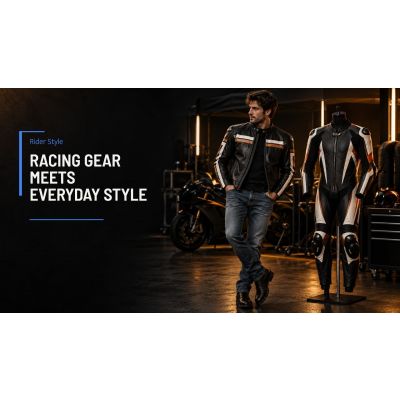
A MotoGP outfit can mean two different things: the protective leathers riders wear on the grid, or a casual look that borrows the grid's colours, fabrics and attitude. The first is regulated safety equipment. The second is a style choice, and it works well when the two are kept apart. Street clothing inspired by a race team looks the part, but only proper motorcycle gear is made to be ridden in.
This guide covers both sides. It explains what MotoGP riders are required to wear, how race-suit design translates into everyday outfits, and how to build looks around a leather jacket, jeans, boots and a few team-colour accents without copying a uniform.
Key Takeaways
- MotoGP riders wear a one-piece leather suit with helmet, gloves, boots, back protector and chest protector, and airbag-equipped suits have been compulsory for permanent riders in MotoGP, Moto2 and Moto3 since the 2018 season.
- Casual MotoGP-inspired outfits borrow colour blocking, panel lines and sponsor-style graphics, not the protective construction.
- A leather jacket, dark denim, boots and one team-colour accent is the simplest way to build the look.
- Fashion jackets are not a substitute for riding gear; check what the product page lists for armour and ask for the documentation.
What MotoGP Riders Actually Wear
The regulations describe a complete equipment set: a one-piece leather suit, helmet, gloves, boots, a back protector and a chest protector. According to Crash.net, that equipment must be worn and correctly fastened under the rulebook, and the same report describes a three-second penalty given to a rider in 2021 for unzipping his leathers and discarding his chest protector.
Since the 2018 season, airbag-equipped race suits have been compulsory for permanent riders in MotoGP, Moto2 and Moto3, as Roadracing World reported when the rule was announced.
That context matters for fashion, because the suit shapes the look. Fitted panels, stretch inserts, a hump or fairing-style back section and bold colour blocks all exist for function first. Casual designers borrow the visual language; the engineering stays on the track. Riders who want a race-suit style can browse the collection or the range, which are inspired by the riders and teams of the grid and are not affiliated with any team; check the product page for what armour it lists and ask for the documentation.
Race-Suit Design Cues Worth Borrowing
A good MotoGP-inspired outfit does not copy a suit panel for panel. It picks two or three recognisable cues and lets everything else stay quiet. The cues below carry over to street clothes most easily.
Colour blocking
Race leathers use large colour fields, often split across the shoulders, chest and sleeves. In a casual outfit, one jacket with contrasting sleeves or a bold yoke does the same job. Keep trousers and base layers neutral so the jacket remains the single focal point.
Panel lines and stitching
Seams on a racing suit follow the body's movement. On a leather jacket, visible stitched panels and ribbed or quilted sections on the shoulders and elbows give a similar silhouette. Leather in a single dark colour with decorative stitching is the understated version.
Team-style graphics
Sponsor-style lettering and number panels are the most obvious markers of a race look, and also the easiest to overdo. One graphic element per outfit is usually enough. Replica-style pieces are inspired by teams and riders and carry no affiliation with them.
Casual MotoGP-Inspired Outfit Ideas
The ideas below start from a leather jacket because it is the garment closest to the paddock aesthetic. Each one changes the supporting pieces rather than the core idea.
The paddock regular
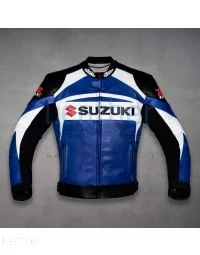
A fitted leather jacket in a team-inspired colour, a plain tee, dark jeans and low boots. A racing-style jacket such as a suits this look because its colours and panel layout are inspired by race leathers. Its product page lists removable CE Level 2 armour as a paid add-on in the order form, so check what is included before riding in it. Swap the boots for plain sneakers if the outfit is for a weekend away from the bike.
Minimal urban version
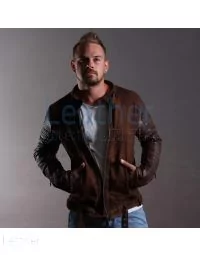
If race graphics feel like too much for daily wear, a clean-cut sheepskin jacket takes the same attitude without the branding. A in a neutral colour works with chinos or dark denim, and a ribbed knit underneath adds texture without competing with the leather.
Women's grid-inspired outfit
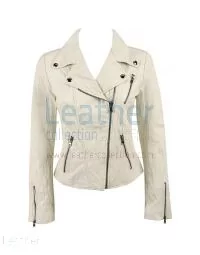
A cropped biker jacket in white or a single bright shade, high-waisted black trousers and ankle boots borrows the contrast of a white race suit with coloured trim. A sets the base, and a small colour accent in the scarf, bag or sneakers echoes a team livery. The same approach works with the selection in other colours.
Garage and workshop look
Heavier fabrics, utility pockets and darker tones recall the mechanics and crew rather than the riders. Black leather, a work shirt, sturdy trousers and boots with a visible sole give a relaxed version of the theme that reads as motorcycle-related without any logos.
Accessories and Details That Carry the Theme
Small items add the racing reference without committing to a full replica. Racing-style with contrast panels or perforated sections are an easy first step, and they are practical in cool weather. Boots with a rounded toe and a clean profile fit the same idea, and a plain black or tan belt keeps the overall outfit tidy.
Colour repetition helps. If the jacket has red and white in it, repeat one of those colours once in the shoes or a cap, then stop. Wearing a full set of matching accessories starts to look like a costume rather than an outfit.
Fashion Pieces Versus Riding Gear
Fashion leather and riding leather can look alike on a hanger, and the difference is easy to miss. A garment sold for style is not made to protect in a crash, and wearing one for riding is a safety decision the rider has to make with open eyes. A jacket intended for riding is built with abrasion-resistant materials, reinforced seams and a provision for armour.
Standards describe what protective garments are tested for. EN 17092 is the European standard for motorcycle protective clothing and has five garment classes: AAA, AA, A, B and C, as described by SATRA. That page also states that EN 1621 impact protectors must be positioned in the garment to cover the relevant body part. A listing does not carry these markings simply because it looks sporty, so check the product page for the armour it lists and ask for the documentation before relying on any garment for riding.
When the purpose is to ride, start from the riding gear and add style on top. When the purpose is to look the part off the bike, a fashion jacket is fine, and it is worth being honest with yourself about which one you bought.
Choosing a Jacket and Getting the Fit Right
Fit makes the outfit. A racing-inspired jacket is normally cut closer to the body than a casual one, with the sleeves sitting at the wrist when the arms are bent as if holding handlebars. For off-bike wear a slightly relaxed fit looks more natural. Check the shoulder seam against your own shoulder, test the sleeve length, and make sure there is room for a sweater if the outfit is for colder days.
Leather type and finish change both the look and the way the jacket feels. Smooth finishes read as sleek and sporty, while crinkled or textured finishes lean toward casual. For care, follow the garment's care label and the maker's instructions, because the right product depends on the leather's finish and construction.
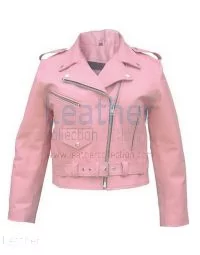
Colours from the grid are not limited to red and black. Teams use white, blue, yellow, green and orange, and a jacket in one of those shades works well when everything else in the outfit stays neutral. A fashion piece in a bright shade, such as a , follows the same logic: one strong colour, quiet surroundings.
A Simple Formula for Building the Outfit
Start with the jacket and choose the colour first. Add a plain top in white, grey or black, then dark trousers, then boots or sneakers. Add one accessory that repeats a colour from the jacket. Check the result in a mirror and remove one item if it feels busy. The goal is a look that suggests the grid without announcing it.
Frequently Asked Questions
Do MotoGP riders have to wear leather suits?
The regulations list a one-piece leather suit as part of the required equipment, alongside helmet, gloves, boots, a back protector and a chest protector. Since the 2018 season, airbag-equipped race suits have also been compulsory for permanent riders in MotoGP, Moto2 and Moto3. Details can change, so the championship rulebook is the final reference for anyone who needs the current wording.
Can I wear a race-suit-style jacket as everyday fashion?
Yes. Many people wear racing-inspired jackets as casual clothing because the colours, panels and cuts are distinctive. The jacket then works as a style piece. If it will also be used for riding, look at the armour listed, the construction and the documentation on the product page, and treat the two uses as separate decisions.
How do I avoid looking like I am wearing a costume?
Choose one or two race-inspired elements, such as a colour-blocked jacket or contrast gloves, and keep the rest of the outfit neutral. Avoid matching every item to a single team. A plain tee, dark jeans and simple boots keep the jacket as the focus and make the outfit easy to wear daily.
Are replica-style jackets official team gear?
No. Replica-style pieces from independent makers are inspired by riders and teams, and they are independent of any team, rider or championship. They copy the look in colours and panel layout and do not imply any affiliation, so buyers should treat them as style pieces and not as team-issued items.
Written by the Leather Collection Editorial Team.