 USA
 Canada
 Brazil
 Germany
 France
 Italy
 Switzerland
 Sweden
 Spain
 Norway
 Russia
 South Africa
 Japan
 New Zealand
 Australia

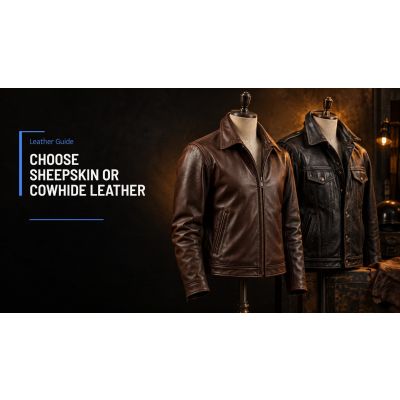
Short answer: lambskin is softer, lighter and drapes closer to the body, so it suits fashion and everyday jackets. Cowhide is thicker, heavier and holds its shape, so it is the usual choice for motorcycle jackets where abrasion resistance matters. Neither leather protects you on its own: for riding, thickness, seams and armor all count.
Lambskin vs cowhide at a glance
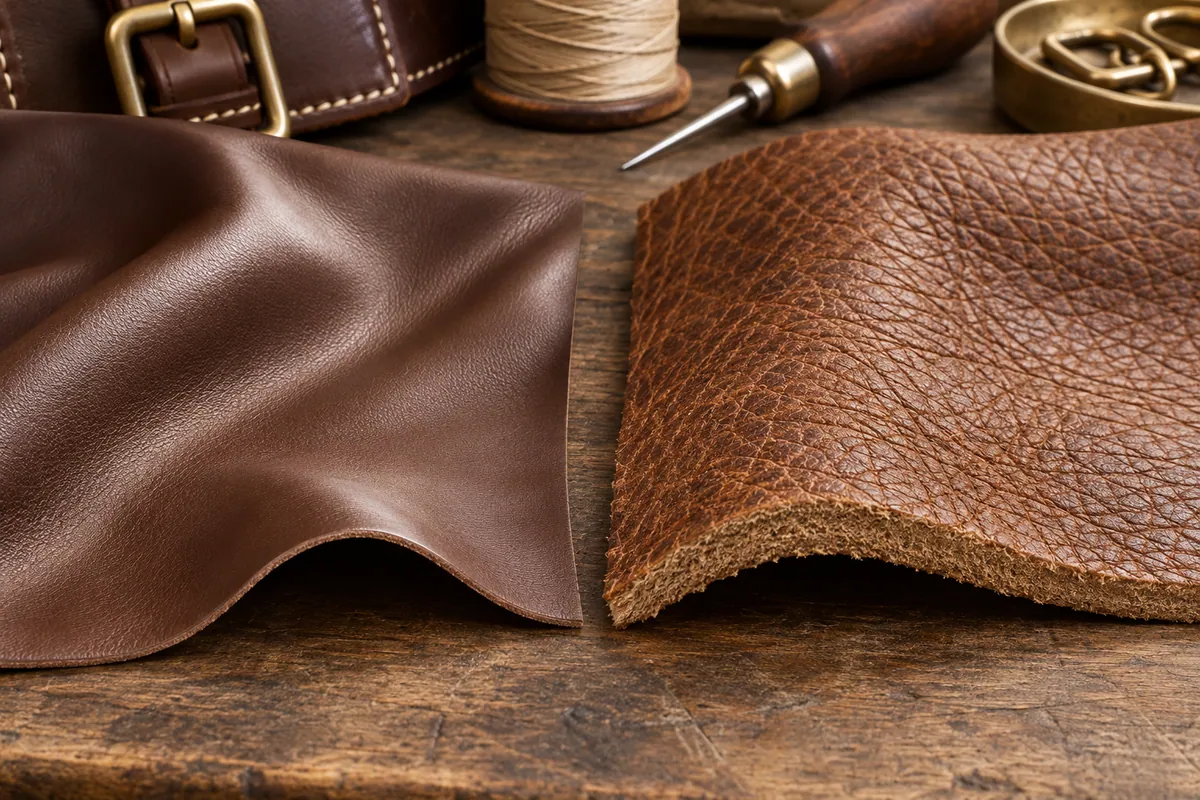
This table compares the two leathers in general terms. Individual hides vary a lot with tanning, finish and thickness, so treat it as a starting point rather than a rule for every jacket.
| Point | Lambskin | Cowhide |
|---|---|---|
| Feel | Very soft, smooth, flexible | Firmer, more structured |
| Weight | Light | Heavier |
| Thickness | Thin | Usually thicker |
| Abrasion resistance | Lower; suits casual wear | Higher; common in riding gear |
| Break-in | Comfortable almost at once | Stiff at first, softens with wear |
| Shape | Drapes and follows the body | Holds a bold, structured silhouette |
| Wind resistance | Moderate | Better, because it is thicker |
| Aging | Soft patina, shows scuffs and creases easily | Deeper patina, handles rough use |
| Typical use | Fashion, daily wear, travel | Motorcycle jackets, outerwear, heavy daily use |
| Price tier | Often mid to high for quality skins | Often mid; wide range by grade |
The price row is the loosest. A well-finished lambskin can cost more than a plain cowhide jacket of the same pattern, because the skins are smaller and the surface has to be cleaner.
What lambskin is, and what it is not
Leather names cause more confusion than the leathers themselves. Here is how the terms are normally used.
- Lambskin: leather from a young sheep. It is the finest and softest of the sheep family.
- Sheepskin leather: leather from sheep in general. Some makers use it as a catch-all for lamb and adult sheep, so ask what a seller means.
- Shearling: sheepskin tanned with the wool left on, usually worn with the wool on the inside for warmth.
- Goatskin: a separate animal. It is typically firmer and more pebbled than lambskin, and it sits between lamb and cow for toughness.
Our older comparison called this pair "sheepskin vs cowhide". The question buyers type is more often "lambskin vs cowhide", which is why this guide leads with lambskin. The comparison holds for sheepskin leather in general. For a wider look at the whole family, see different types of leather explained and the three-way cowhide vs sheepskin vs kangaroo guide.
The leather type is also separate from the grade. A full-grain lambskin and a corrected-grain one feel quite different. If you want to read labels properly, the full-grain vs top-grain guide explains what those names mean.
Riding vs fashion: how to read the difference
For a jacket worn to the office, a bar or a flight, lambskin is hard to beat. It is light enough to forget, and it fits close without bulk. Most buyers who want a sleek, slim leather jacket are better served by lambskin than by a heavy hide.
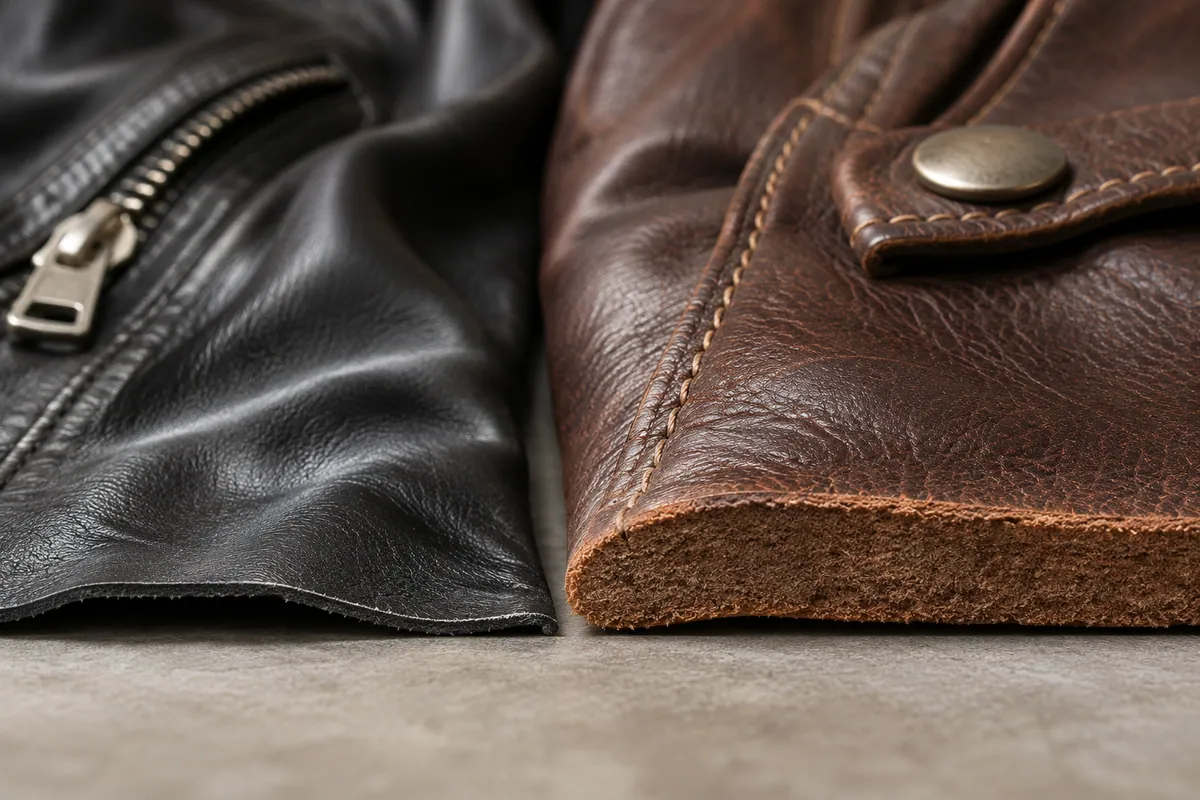
Riding is a different job. In a slide, the leather has to survive abrasion long enough for you to stop, and thickness is a large part of that. That is why cowhide, and thicker hides such as kangaroo, are the traditional choice for motorcycle jackets and race suits.
Two cautions. First, "cowhide" does not mean "safe": a thin cowhide fashion jacket with no armor and weak seams is not riding gear. Second, a lambskin jacket is not a riding jacket just because it looks like a biker style. If you ride, look for armor, a stated EN 17092 class label and strong stitching. Our guide to decoding CE ratings and EN 17092 explains the label. To be plain about our own gear: Leather Collection suits and jackets do not carry a whole-garment EN 17092 class (AAA, AA or A). Their armor is CE-rated to EN 1621-1.
Thickness: the number that matters most
When people say cowhide is "tougher", they are mostly talking about thickness. Leather thickness is measured in millimeters, and a thin cowhide used for a fashion jacket can be little tougher than a medium-weight lambskin. A thick cowhide used for riding is a different material in practice.
That is why a leather type on a label tells you less than the thickness and the construction. If a seller states the thickness of the hide, that is far more useful than the animal alone. If it does not, ask. A heavier leather is also warmer against wind, but it is less comfortable in hot weather and takes longer to break in.
Seams matter just as much. In a slide, the leather rarely fails first: stitching is where many garments give way. Double or triple stitching, safety stitching on the main seams and a proper cut that does not strain at the shoulders all raise real-world durability, whichever leather you pick.
Common myths
- "Cowhide is always better." It is better for some jobs. For a slim city jacket that you want to feel soft, lambskin often wins.
- "Lambskin is not real leather." It is real leather, just a lighter and finer type.
- "Thicker means safer on a bike." Thicker helps, but armor, seams and fit matter too.
- "Soft leather will always stretch to fit." It may give a little, but a jacket that is too tight in the shoulders will stay tight.
When not to choose each one
- Skip lambskin if you want a jacket for daily riding, heavy outdoor work or years of rough wear. It will scuff and tear sooner.
- Skip cowhide if you want a drapey, lightweight jacket that feels soft on day one, or you dislike a stiff break-in period.
- Skip either one if the only thing you are comparing is price. Compare thickness, finish and construction as well.
Fit, stretch and break-in
Lambskin feels broken in right away, but it can also stretch in the elbows and shoulders over time. Cowhide starts stiffer and then molds to you. Neither should be bought a size too big in the hope it will "settle". How much leather really gives depends on the skin and the cut; we cover that in does leather stretch or shrink. For made-to-order jackets, supplying your measurements removes most of the guesswork.
Care and aging
Both leathers need the same basics: keep them away from heavy rain and direct heat, store them on a wide hanger and follow the maker's care label. The right conditioner depends on the finish, so test on a hidden area first.
- Lambskin marks easily. Light scratches can often be softened by gentle rubbing, but deep scuffs are harder to hide.
- Cowhide usually wears its scuffs as character. Over the years it darkens and develops a patina that many owners prefer.
- Repairs are simpler on thicker hides. A split seam can be restitched on either, but a torn thin panel often needs a new one.
Which should you pick?
- Do you ride? Choose cowhide (or another riding-grade hide), then check armor and the EN 17092 label.
- Is comfort on day one your priority? Choose lambskin.
- Do you want a structured, classic biker look? Cowhide holds it better.
- Do you want a slim, soft, city jacket? Lambskin drapes better.
- Is it your only jacket and it will take daily use? Cowhide lasts longer.
- Own two? A lambskin for dressing up and a cowhide for harder days is a sensible pair.
Choosing leather on a custom order
If you are having a jacket made rather than buying one off the rail, you can match the leather to the use from the start. Custom leather jackets for everyday wear can be specified for softness and drape. For riding, custom motorcycle jackets are the better starting point, built from thicker leather. Which leathers are offered on each style is stated on each product page; for example, the cafe racer jackets are cut from 0.8-0.9 mm sheepskin.
FAQs
Is lambskin better than cowhide?
Neither is better in every case. Lambskin is better for softness, light weight and drape. Cowhide is better for toughness, structure and riding. Decide by how you will wear the jacket.
Is lambskin durable?
It can last many years with care, but it is thinner and more easily scuffed or torn than cowhide. It suits fashion and daily wear better than hard use or riding.
Which is warmer, lambskin or cowhide?
Warmth depends more on lining and construction than on the leather. Cowhide blocks wind better because it is thicker, while a shearling lining adds far more warmth than either leather alone.
Is cowhide good for motorcycle jackets?
Yes, cowhide is a common choice for riding jackets because it is thick and resists abrasion. For riding, also look for armor, strong seams and a stated EN 17092 class label, since the leather type alone does not guarantee protection.
Does lambskin stretch more than cowhide?
Generally yes. Soft, thin skins give more at the elbows and shoulders with wear, while cowhide holds its shape. Order the size that fits now rather than counting on stretch.
Ready to choose? Start with custom leather jackets and pick the leather and fit that match how you will actually wear it.