 USA
 Canada
 Brazil
 Germany
 France
 Italy
 Switzerland
 Sweden
 Spain
 Norway
 Russia
 South Africa
 Japan
 New Zealand
 Australia

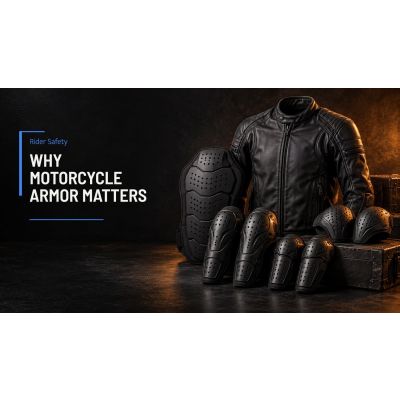
Short answer: Level 2 armor lets less impact force through than Level 1 in the standard's test, and it is usually thicker. Level 1 is the baseline on many riding builds. Neither level guarantees you will avoid injury. On our superhero riding suits and jackets, removable CE Level 1 armor is standard and Level 2 is a paid upgrade.
Level 1 vs Level 2 at a glance
| Level 1 | Level 2 | |
|---|---|---|
| Test result | Passes the standard's force limit | Passes a stricter, lower force limit |
| Limb protector (EN 1621-1), average transmitted force | Below 35 kN, no single result above 50 kN | Below 20 kN |
| Back protector (EN 1621-2), average transmitted force | Below 18 kN, no single result above 24 kN | Lower limits than Level 1; exact figures are in the standard |
| Typical feel | Thinner, more flexible | Often thicker and stiffer |
| Best for | Everyday and warm-weather riding where comfort matters | Riders who want more impact reduction and accept more bulk |
The Level 1 figures match SATRA's description of EN 1621, and the Level 2 limb figure is the one manufacturers publish for the same test. We do not list the Level 2 back figures here, so read the standard or the protector's own documents for them. A lower figure means less force reaches the body in the lab test.
What CE armor is
CE stands for Conformité Européenne. It shows that a product is declared compliant with European requirements. Motorcycle clothing counts as personal protective equipment under Regulation (EU) 2016/425, so protective garments sold in Europe must be CE marked. EN 17092 is the standard for the garments, and the EN 1621 series covers separate impact protectors. Our wider explainer on what CE armor is and why it matters covers the basics, and this article focuses on the levels.
What the test measures
In the lab, a striker is dropped onto the protector while it sits on an anvil. A sensor under the anvil records how much force passes through. The less force that gets through, the more the protector absorbed. A protector earns a level only when its results stay within the limits for that level.
Two points matter for a buyer. The level describes the protector, not the garment. The EN 17092 class of the garment (AAA, AA, A, B or C) is a separate rating for the abrasion resistance and construction of the clothing. A jacket can carry Level 2 protectors and still be a lower garment class, and the reverse.
Level 1: where it is used
Level 1 protectors are common in jackets, pants and suits because they are thinner and flexible, so they sit comfortably and stay in place. For many riders, this is the armor that gets worn every day, and armor that is worn beats armor that stays in the closet. The trade-off is a higher transmitted-force limit.
Level 2: added protection, more bulk
Level 2 protectors pass a stricter limit, so they let less force through in the test. They are often thicker and can feel stiffer, and they may cost more. Riders who ride fast, ride long distances on highways or want the highest tested level tend to choose them. Check that your garment's pockets can hold them without bunching.
Does the level matter for you?
| Riding | What to think about |
|---|---|
| Commuting and city riding | Comfort, so the armor stays in all year. Level 1 is a common choice, and Level 2 if you are happy with the bulk. |
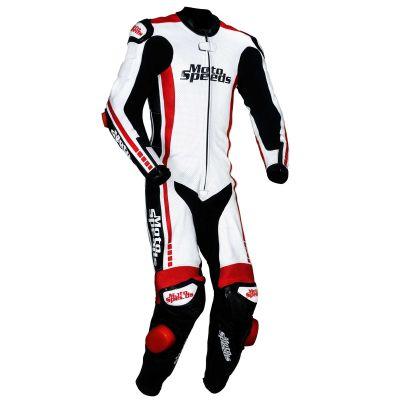
| Track days and fast sport riding | Look at the level, the coverage and the fit. A custom race suit can be planned around the armor. |
| Touring | Long days mean comfort matters. Check ventilation and the weight of the armor too. |
This is a general guide. Each rider's choice depends on their bike, speed, route and risk tolerance, and official rider-safety organizations and the garment maker are better sources than any article.
Where armor sits
Armor only works when it stays over the area it was made to protect. Common zones are the shoulders and elbows, the back, the chest where the garment has a pocket for it, and the knees in pants and suits. See our guide to where armor sits in a race suit and what the label means on CE-rated one-piece suits. Armor and airbags do different jobs, which our airbag vs armor article explains.
What armor is made of
Protectors are made from foam and other engineered materials, and construction differs between makers. The material matters less than the tested level marked on the protector, because that rating shows how it performed in the lab. Flexibility still counts, since a protector that moves with the body is easier to wear correctly and less likely to shift.
Common mistakes when comparing armor
- Mixing up the two ratings. A Level 2 protector in a lower-class garment is not the same as a high garment class with Level 1 protectors. Read both.
- Judging by thickness. A thicker protector is not automatically a higher level. Look for the marking.
- Ignoring coverage. A small protector in a large pocket can slide off the joint. Placement and size matter as much as the level.
- Forgetting the back. Many jackets ship with foam inserts instead of a certified back protector. Check the product page for what is included.
- Assuming it lasts forever. Protectors age, and a protector that has taken a hit should be replaced.
Why fit matters for armor
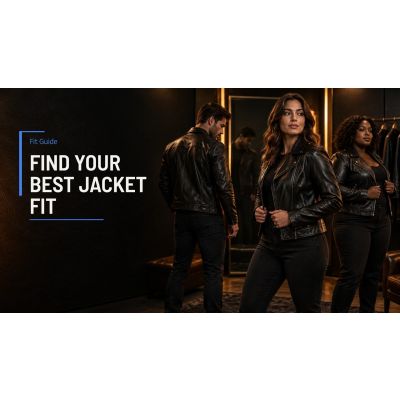
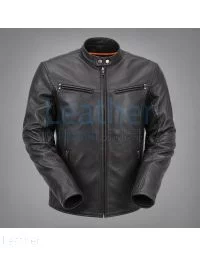
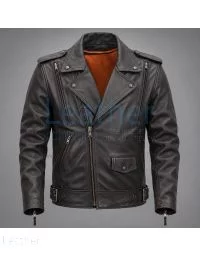
If a jacket is too loose, armor shifts. If it is too tight, armor may not sit correctly. That is why proper sizing matters, and why riders between sizes can look at custom motorcycle jackets cut to their measurements. Our leather motorcycle jackets page shows the range of ready-made options.
Armor in Leather Collection gear
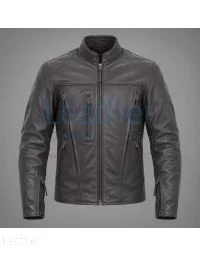
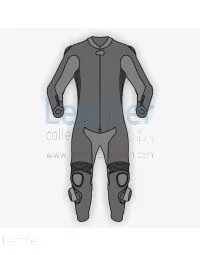
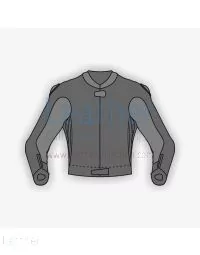
Our superhero riding suits have removable CE Level 1 armor at the shoulders, elbows, knees and hips, with a back pocket for an optional EN 1621-2 back protector sold as an add-on. The jackets have removable CE Level 1 armor at the shoulders and elbows and the same back pocket. Level 2 is a paid upgrade on both, and on our riding pants too. The cosplay and display builds have no armor. Our riding pants have removable CE Level 1 armor at the knees and hips (Level 2 is a paid upgrade there as well), and chaps have no armor. None of our suits, jackets or pants carries a whole-garment EN 17092 class. For any other product, check the product page.
Can you upgrade jacket armor?
Some jackets have pockets that accept replacement or upgraded protectors. Check the maker's instructions first. Before upgrading, check pocket compatibility and size, and never force armor into a pocket not designed for it. Options include replacing Level 1 with Level 2 where the pocket allows, adding a chest protector or installing a larger back protector.
Looking after armor
Remove armor before washing a garment, and follow the instructions supplied with it. Replace protectors after any impact from an accident, and check them regularly for cracks, hardening or deformation. Manufacturers give different guidance on service life.
FAQs
Is Level 2 armor better than Level 1?
Level 2 passes a stricter limit, so it lets less force through in the test. It is also often thicker. Better depends on whether you will wear it every ride.
Can I upgrade my jacket's armor to Level 2?
On our superhero jackets, yes: Level 2 is a paid upgrade you choose when you order. For other garments, it depends on whether the pockets are made for it. Check the garment maker's instructions and never force a protector into a pocket not designed for it.
Is Level 1 enough for street riding?
Level 1 is the baseline on many riding garments. Whether it is enough depends on your riding, and no armor level guarantees protection. Check your local rules and a rider-safety organization.
How do I tell what level my armor is?
Look at the label or marking on the protector, which shows the standard and level. If it is missing, ask the maker.
Is CE armor mandatory?
That depends on local law. CE marking is a product requirement in the EU and is separate from any law about wearing armor.
Does leather alone protect?
Leather resists abrasion in a slide but does little against blunt impact. Armor is the part tested for impact, so the two work together.
Choose your protection in our custom race suits, or talk to us about armor options in custom motorcycle jackets.